Acetyl chloride → HCID 67330482, compound
Reaction equation

OS(C(F)(F)F)(=O)=O.[Cl:9]C1C=C(C=C(Cl)C=1)C=NCC(OCC)OCC.[OH-].[NH4+].[Cl:29][C:30]1[CH:39]=[C:38]([Cl:40])[CH:37]=[C:36]2[C:31]=1[CH:32]=[CH:33][N:34]=[CH:35]2.C(Cl)(=O)C>ClCCl.O.C(O)C.CO>[ClH:9].[Cl:29][C:30]1[CH:39]=[C:38]([Cl:40])[CH:37]=[C:36]2[C:31]=1[CH:32]=[CH:33][N:34]=[CH:35]2Participants
Reactant 5


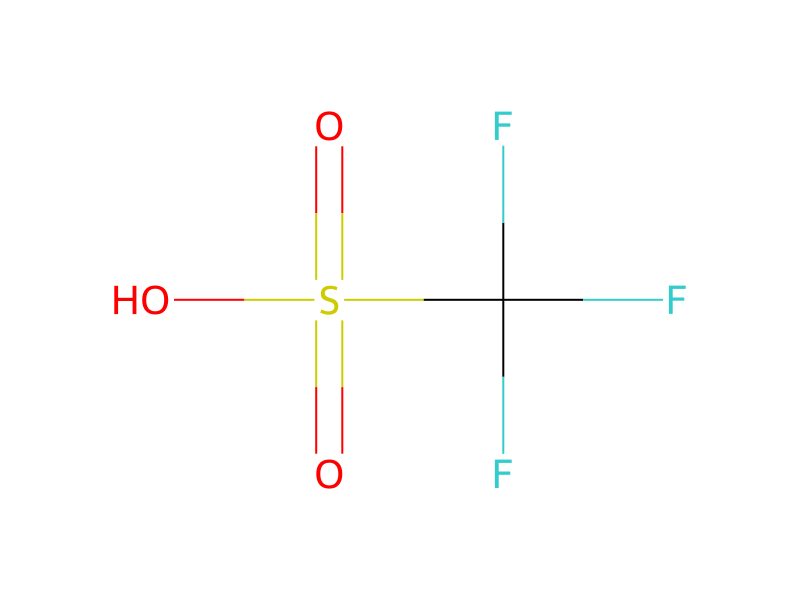


Product 1

Reagents, catalysts & solvents 4




Conditions
- Temperature
- 80 °C
Procedure
Triflic acid (2.97 L; 33.52 moles; 5.03 kg) is charged to a 12 L flask equipped with a Dean Stark trap, overhead stirring, condenser, nitrogen inlet, 3 L addition funnel (buffered from the flask via a condenser), and thermocouple. The triflic acid is heated to 120° C. (3,5-Dichloro-benzylidene)-(2,2-diethoxy-ethyl)-amine (1350.5 g; 1.00 equiv; 4.65 moles) is diluted with dichloromethane (1350 mL) and is charged to the addition funnel. The addition is started with the temperature at 119° C. The addition is completed over 90 minutes holding the temperature at 120° C. Approximately 1500 mL of distillate is collected during the addition. Area % HPLC 45 minutes after the addition is completed and indicates 94.14% product and 4.86% (3,5-Dichloro-benzylidene)-(2,2-diethoxy-ethyl)-amine. The heat is shut off after 1.5 hr. The reaction is cooled to ˜80° C. At this point the flask is placed in an ice water bath and is cooled further. Add methanol (2.7 L) with the reaction at 9° C. The addition is completed over 60 minutes. The maximum temperature is 27° C. Some solid forms during the methanol addition. This slurry is transferred in portions to a 2 L addition funnel and is added to a solution of ammonium hydroxide (5.1 L; 36.67 moles; 4.59 kg) and water (5.1 L) in a 22 L flask, chilled in ice water to <2° C. The addition funnel has a Teflon® tube extension to prevent the material from running down the side of the flask, which can lead to a more oily solid adhering to the flask wall. The material is added in small slugs to prevent the addition funnel from plugging due to the solids. The addition is completed over 35 minutes including a methanol (900 mL) rinse of the flask and addition funnel. The maximum temperature is 26° C. A brown solid forms. The slurry is cooled to 14° C. The solid is filtered onto a polypropylene pad. The solid is washed with 2×4 L and 1×2 L of water. The solid is then washed with 2 L of heptane to aid drying. The solid is dried in vacuo at 50° C. to a weight of 999.0 g (108.4% of theory). The 5,7-dichloro-isoquinoline (997 g; 1.00 equiv; 5.03 moles) and ethanol (14.97 L) are charged to a 22 L flask equipped with an addition funnel, nitrogen inlet, overhead stirring, and thermocouple. The brown slurry is stirred at ambient temperature (22° C.). The acetyl chloride (1180 mL; 16.58 moles; 1.30 kg) is charged to the addition funnel. This is added to the flask dropwise. The brown slurry darkens. The solid appears to mostly dissolve by adding 100-200 mL of the acetyl chloride. A complete solution does not form. Solid reappears as the addition continues. The addition is completed over 45 minutes. The maximum temperature is 43° C., which is reached about halfway into the addition and is maintained with cool water in the bath. A sample of the reaction is removed after ˜¾ of the acetyl chloride is added for NMR. Since the sample appears to be the salt, excess acetyl chloride is likely not needed. The slurry is stirred and is allowed to cool. After 40 minutes, the temperature is 30° C. The slurry is cooled to <2° C. and is held for 1.5 hr in an ice-water bath. The slurry is filtered. The solid is washed with 2×1.3 L of chilled ethanol. The wet cake weight is 811.4 g. The solid is dried in vacuo at 50° C. The dry weight is 648.4 g. This represents a 61.0% yield. Mass Spectrum (LCMS) m/z=199.05) (M+H+)
Workup
- customequipped with a Dean Stark trap
- additioncondenser, nitrogen inlet, 3 L addition funnel (
- custombuffered from the flask via a condenser
- additionis charged to the addition funnel
- additionThe addition
- customis started with the temperature at 119° C
- additionThe addition
- customat 120° C
- distillationApproximately 1500 mL of distillate is collected during the addition
- additionArea % HPLC 45 minutes after the addition
- waitThe heat is shut off after 1.5 hr
- customAt this point the flask is placed in an ice water bath
- temperatureis cooled further
- customAdd methanol (2.7 L) with the reaction at 9° C
- additionThe addition
- waitis completed over 60 minutes
- customis 27° C
- additionThis slurry is transferred in portions to a 2 L addition funnel
- additionThe material is added in small slugs
- additionThe addition
- waitis completed over 35 minutes
- washrinse of the flask and addition funnel
- customis 26° C
- temperatureThe slurry is cooled to 14° C
- filtrationThe solid is filtered onto a polypropylene pad
- washThe solid is washed with 2×4 L and 1×2 L of water
- washThe solid is then washed with 2 L of heptane
- customto aid drying
- customThe solid is dried in vacuo at 50° C. to a weight of 999.0 g (108.4% of theory)
- customequipped with an addition funnel, nitrogen inlet
- stirringoverhead stirring
- stirringThe brown slurry is stirred at ambient temperature (22° C.)
- additionThis is added to the flask dropwise
- dissolutionto mostly dissolve
- customA complete solution does not form
- additionSolid reappears as the addition
- additionThe addition
- waitis completed over 45 minutes
- customis 43° C.
- additionwhich is reached about halfway into the addition
- customA sample of the reaction is removed after ˜¾ of the acetyl chloride
- additionis added for NMR
- stirringThe slurry is stirred
- temperatureto cool
- waitAfter 40 minutes
- customis 30° C
- temperatureThe slurry is cooled to <2° C.
- waitis held for 1.5 hr in an ice-water bath
- filtrationThe slurry is filtered
- washThe solid is washed with 2×1.3 L of chilled ethanol
- customThe solid is dried in vacuo at 50° C
Sources & evidence
- ORD record
- ord-70c34024e9214d7db52d1eab5cc04759
- Source dataset
- uspto-grants-2011_08
- Patent number
- US07998977B2
Reaction notes
Loading…