Triethylamine → N-(3-piperidin-1-yl-propyl)-terephthalamic acid methyl ester
Reaction equation

[Cl-].[CH3:2][O:3][C:4](=[O:14])[C:5]1[CH:13]=[CH:12][C:8]([C:9]([OH:11])=O)=[CH:7][CH:6]=1.[N:15]1([CH2:21][CH2:22][CH2:23][NH2:24])[CH2:20][CH2:19][CH2:18][CH2:17][CH2:16]1.C(N(CC)CC)C>ClCCl>[CH3:2][O:3][C:4](=[O:14])[C:5]1[CH:6]=[CH:7][C:8]([C:9]([NH:24][CH2:23][CH2:22][CH2:21][N:15]2[CH2:20][CH2:19][CH2:18][CH2:17][CH2:16]2)=[O:11])=[CH:12][CH:13]=1Participants
5




Procedure
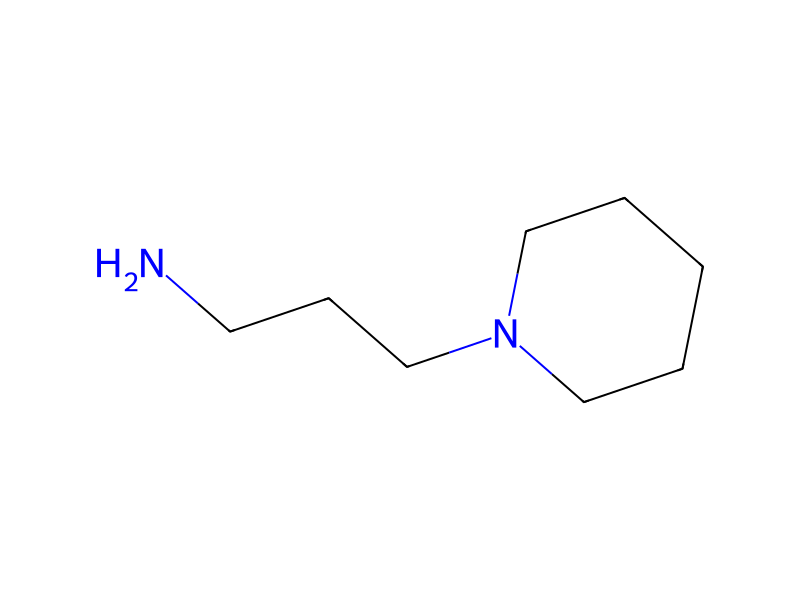
For example, terephtalic acid monomethyl ester chloride is treated with an alkylamine, in this case 3-piperidinopropylamine, and triethylamine, in a suitable solvent such as dichloromethane at ambient temperature for 1-12 hours to provide the desired amide, N-(3-piperidin-1-yl-propyl)-terephthalamic acid methyl ester.
Sources & evidence
- ORD record
- ord-df38345f8b1744cdb3ea3a95ffbb197f
- Source dataset
- uspto-grants-2011_08
- Patent number
- US08008296B2
Reaction notes
Loading…