Hydrogen Peroxide → 2,6-Dimethylhydroquinone
Reaction equation

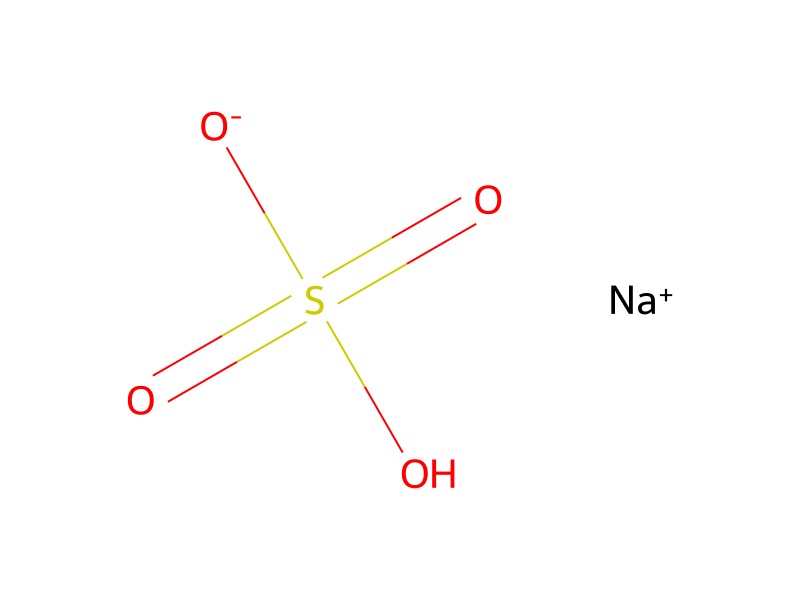
[CH3:1][C:2]1[CH:3]=[C:4]([OH:9])[CH:5]=[C:6]([CH3:8])[CH:7]=1.OO.S(=O)(=O)(O)[O-:13].[Na+].CC1C=C(C)C=C(O)C=1O>CC(C)CC(=O)C>[CH3:8][C:6]1[CH:5]=[C:4]([OH:9])[CH:3]=[C:2]([CH3:1])[C:7]=1[OH:13]Participants
6
Reactant 4


Product 1

Reagents, catalysts & solvents 1

Procedure
In a vessel used in Example 52 were placed 100 g. (819 m. moles) of 3,5-dimethylphenol, 2.97 g. (29.7 m. moles) of 4-methyl-2-pentanone, 2.52 g. (44.5 m. moles) of 60 percent hydrogen peroxide and 0.01 g. of sodium bisulfate (NaHSO4.H2O), and the mixture was treated at 110° C. for 20 minutes in the same manner as in Example 52. As products, 2.19 g. (15.9 m. moles) of 3,5-dimethylcatechol and 1.25 g. (9.08 m. moles) of 2,6-dimethylhydroquinone were obtained. The yield of dihydric alkylphenols was 56.1 percent.
Workup
- customIn a vessel used in Example 52
Sources & evidence
- ORD record
- ord-ba5930d2900743d782c50a5d82765c16
- Source dataset
- uspto-grants-1978_03
- Patent number
- US04078006
Reaction notes
Loading…