1,4-Bis(trichloromethyl)benzene → Terephthalic Acid
Reaction equation

C[O:2][C:3](=[O:14])[C:4]1[CH:13]=[CH:12][C:7]([C:8]([O:10]C)=[O:9])=[CH:6][CH:5]=1.ClC(Cl)(Cl)C1C=CC(C(Cl)(Cl)Cl)=CC=1.CCl>[Mo](=O)(=O)=O>[C:8]([OH:10])(=[O:9])[C:7]1[CH:12]=[CH:13][C:4]([C:3]([OH:14])=[O:2])=[CH:5][CH:6]=1Participants
5
Reactant 3

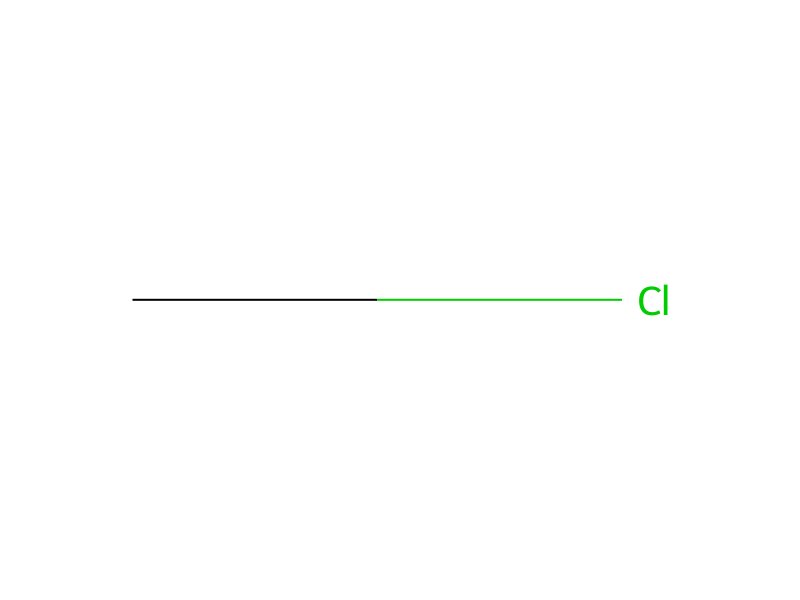

Product 1

Reagents, catalysts & solvents 1

Procedure
A two-liter round flask, equipped with thermometer, magnetic stirrer, Vigreux column (40 cm), fractionating column, air cooler and receiver, was filled with 777 g (4 moles) of dimethylterephthalate, 1252 g (4 moles) of 1,4-bis-(trichloromethyl)-benzene and 4 g of molybdenum trioxide. The flask contents were maintained for 3 hours at 170° to 175° C. The escaping methyl chloride was captured in a cooling trap following the receiver. In the vacuum distillation that followed, 1559 g of terephthalic acid was obtained in a purity of 99.8% (GC). This corresponds to a yield of 95.8%.
Workup
- customA two-liter round flask, equipped with thermometer, magnetic stirrer, Vigreux column (40 cm), fractionating column, air cooler and receiver
- temperatureThe flask contents were maintained for 3 hours at 170° to 175° C
- distillationIn the vacuum distillation that
Sources & evidence
- ORD record
- ord-30b114daae7643578e7f2fba99c64c72
- Source dataset
- uspto-grants-1978_03
- Patent number
- US04080378
Reaction notes
Loading…