Acetone → HCID 20362892, compound
Reaction equation

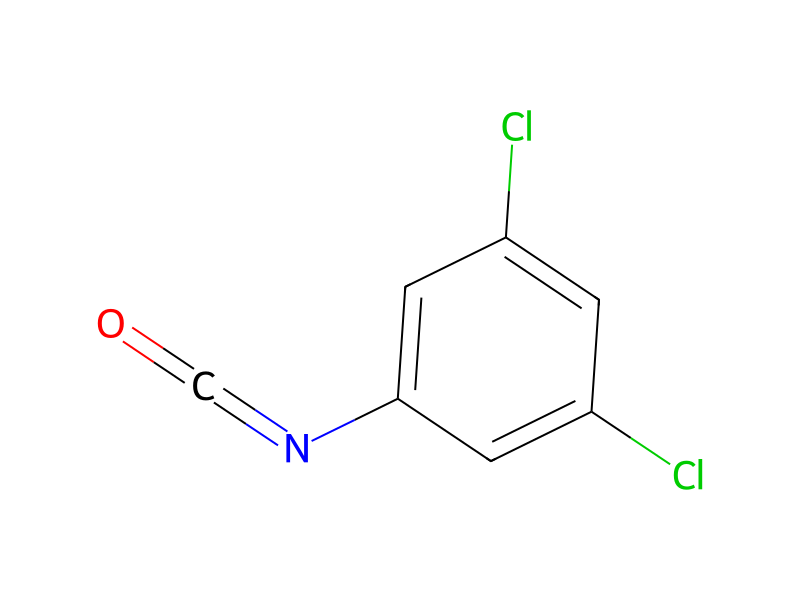
[Cl:1][C:2]1[CH:3]=[C:4]([N:9]=[C:10]=[O:11])[CH:5]=[C:6]([Cl:8])[CH:7]=1.C([N:14]([CH2:17]C)CC)C.[CH:19]([N:22]1[C:26](=[O:27])[CH2:25]NC1=O)([CH3:21])[CH3:20].CC(C)=[O:31]>>[Cl:1][C:2]1[CH:3]=[C:4]([N:9]2[CH:25]([C:17](=[O:31])[NH2:14])[C:26](=[O:27])[N:22]([CH:19]([CH3:20])[CH3:21])[C:10]2=[O:11])[CH:5]=[C:6]([Cl:8])[CH:7]=1Participants
5




Conditions
- Temperature
- 20 °C
Procedure
A solution of 3,5-dichlorophenyl isocyanate (71.5 g.) in acetone (250 cc.), and triethylamine (38.4 g.) are added successively, whilst stirring, to a solution of 3-isopropyl-hydantoin (56.8 g.) in acetone (250 cc.). The temperature of the reaction mixture rises gradually from 25° C to 50° C over the course of 20 minutes and then again drops, whilst a copious precipitate forms. The reaction mixture is stirred for a further 5 hours at a temperature of about 20° C. The precipitate is filtered off, washed with acetone (2 × 50 cc.) and then dried under reduced pressure. 1-(3,5-Dichlorophenyl)-carbamoyl-3-isopropyl-hydantoin (100 g.) melting at 200° C, is thus obtained.
Workup
- customrises gradually from 25° C to 50° C over the course of 20 minutes
- filtrationThe precipitate is filtered off
- washwashed with acetone (2 × 50 cc.)
- customdried under reduced pressure
Sources & evidence
- ORD record
- ord-4eea92eacb154ef2a1de00594c15c163
- Source dataset
- uspto-grants-1978_03
- Patent number
- US04080473
Reaction notes
Loading…