Hydrochloric Acid → HCID 753926, compound
Reaction equation

COC1C=C2C(=CC=1)[NH:12][C:11]1[C:10](=[O:16])[CH2:9][CH2:8][CH2:7][C:6]2=1.[CH3:17][O:18][C:19]1[CH:25]=[CH:24][C:22]([NH2:23])=[CH:21][CH:20]=1.Cl.[N+]([O-])([O-])=O.[Na+].[Na].C(=O)([O-])[O-].[Na+].[Na+].C([O-])(=O)C.[Na+]>CO.O>[CH3:17][O:18][C:19]1[CH:25]=[CH:24][C:22]([NH:23][N:12]=[C:11]2[CH2:6][CH2:7][CH2:8][CH2:9][C:10]2=[O:16])=[CH:21][CH:20]=1Participants
Reactant 7



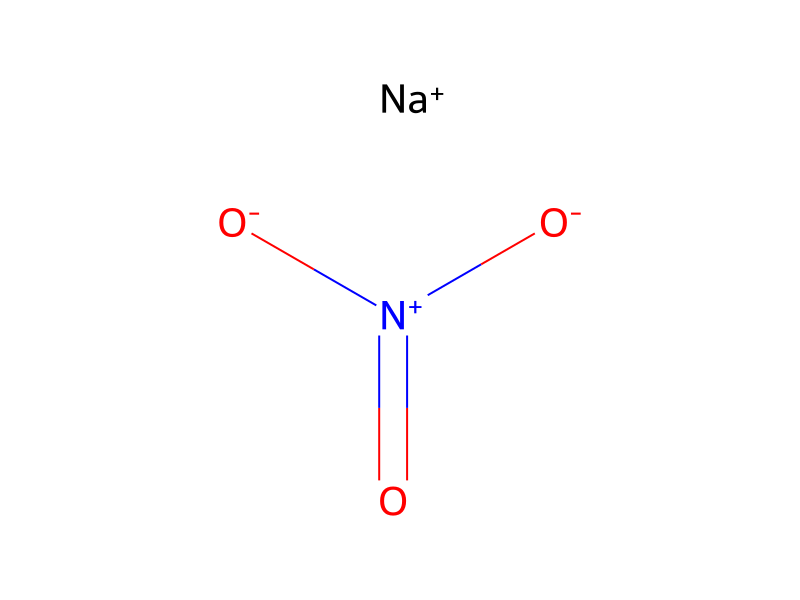



Product 1

Reagents, catalysts & solvents 2


Conditions
- Temperature
- 0 °C
Procedure
6-methoxy-1,2,3,4-tetrahydrocarbazol-1-one 123 g. (1 mole) of p-methoxyaniline are dissolved in 600 ml. of water with the addition of 260 g. of concentrated hydrochloric acid. After cooling down to 0° C., 69 g. of sodium nitrate dissolved in 130 ml. of water are added dropwise to the solution. The diazotation being complete, 350 ml. of methanol and 148 g. (1 mole) of the sodium salt of the 1-hydroxymethylene-cyclohexanone are added and the temperature is maintained below +3° C. by adding ice. By the addition of 33.5 g. of anhydrous sodium carbonate and 250 g. of crystallized sodium acetate the solution is standardized to pH 5 to 6. After coupling is completed (10 to 12 hours or so), the solution is made up to a pH 9 to 9.5, stirred three hours at room temperature, filtered with suction and washed with water until free from alkali. Thus, cyclohexanedione-mono-p-methoxyphenylhydrazone is obtained which melts at 177° C. and has a yield of 202 g. (=87% of the theoretical).
Workup
- temperaturethe temperature is maintained below +3° C.
- additionby adding ice
- additionBy the addition of 33.5 g
- custom10 to 12 hours
- filtrationfiltered with suction
- washwashed with water until free from alkali
Sources & evidence
- ORD record
- ord-41f128d131054ebf8b35078b3587686a
- Source dataset
- uspto-grants-1981_06
- Patent number
- US04271073
Reaction notes
Loading…