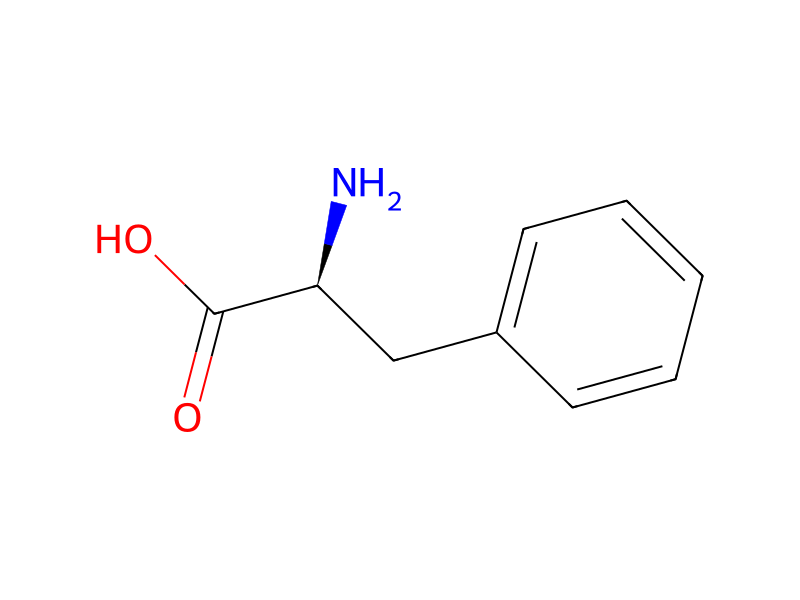
L-Phenylalanine → 3-Cyclohexyl-L-alanine
Reaction equation

[NH2:1][C@H:2]([C:10]([OH:12])=[O:11])[CH2:3][C:4]1[CH:9]=[CH:8][CH:7]=[CH:6][CH:5]=1>C(O)(=O)C.[Rh]>[CH2:7]1[CH2:6][CH2:5][CH:4]([CH2:3][C@H:2]([NH2:1])[C:10]([OH:12])=[O:11])[CH2:9][CH2:8]1Participants
Reactant 1
Product 1

Reagents, catalysts & solvents 2

Procedure
116 Grams of L-phenylalanine is dissolved in 1000 ml of 90% acetic acid and hydrogenated over 23 g of 5% rhodium on carbon at 40 psi and 37° C. for 24 hours. The catalyst is removed by filtration, the filtrate is concentrated to dryness under high vacuum, and the residue is crystallized from 2 liters of 15% acetic acid to give L-β-cyclohexylalanine which is represented by the following formula ##STR60## Substitution of an equivalent quantity of L-β-cyclohexylalanine for the L-phenylalanine of Example 1 and substantial repetition of the procedures detailed in Examples 1 through 9 provides methyl L-tyrosyl-D-methionyl-glycyl-L-β-cyclohexylalanyl-3-amino-1-adamantanecarboxylate hydrochloride which is represented by the following formula ##STR61##
Workup
- customThe catalyst is removed by filtration
- concentrationthe filtrate is concentrated to dryness under high vacuum
- customthe residue is crystallized from 2 liters of 15% acetic acid
Sources & evidence
- ORD record
- ord-6e64086cc6e942ea9dbd267b93fcf2f3
- Source dataset
- uspto-grants-1981_06
- Patent number
- US04273704
Reaction notes
Loading…