Benzyl Bromide → 1-Benzyl-4-cyano-4-phenylpiperidine
Reaction equation

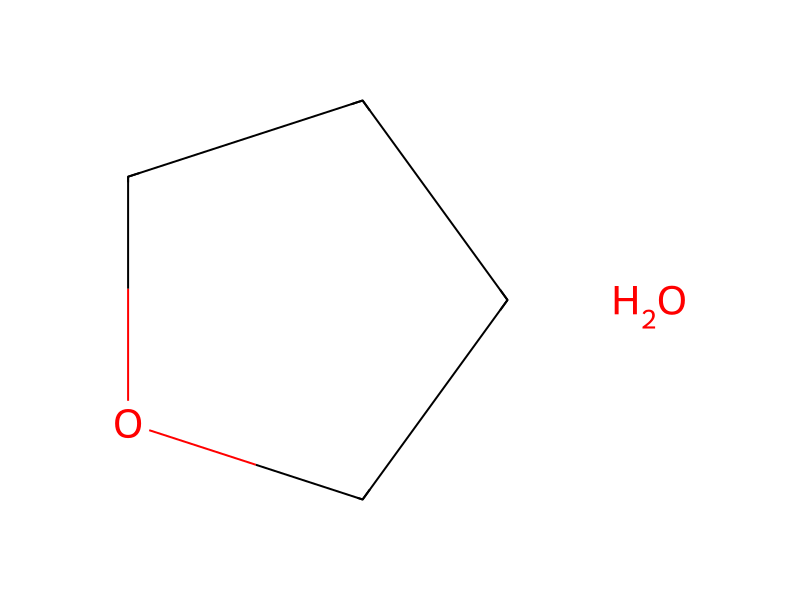
Cl.[C:2]1([C:8]2([C:14]#[N:15])[CH2:13][CH2:12][NH:11][CH2:10][CH2:9]2)[CH:7]=[CH:6][CH:5]=[CH:4][CH:3]=1.[CH2:16](Br)[C:17]1[CH:22]=[CH:21][CH:20]=[CH:19][CH:18]=1.C(=O)([O-])[O-].[K+].[K+]>C1COCC1.O>[C:2]1([C:8]2([C:14]#[N:15])[CH2:9][CH2:10][N:11]([CH2:16][C:17]3[CH:22]=[CH:21][CH:20]=[CH:19][CH:18]=3)[CH2:12][CH2:13]2)[CH:3]=[CH:4][CH:5]=[CH:6][CH:7]=1Participants
5
Reactant 3



Product 1

Reagents, catalysts & solvents 1
Procedure
4-Phenyl-4-cyano-piperidine hydrochloride (10 g, 44.9 mmol), Benzyl bromide (5.4 mL, 45.4 mmol), and potassium carbonate (25.2g, 182.3 mmol) were combined in THF/water (80 mL/20 mL). After 18 hours the reaction mixture was partitioned between water and dichloromethane. The organic layer was separated and extracted with water, dried over MgSO4, filtered and evaporated in vacuo to give a residue. The residue was recrystallized from hexane to give 4-phenyl-4-cyano-1-benzyl-piperidine as a solid: mp=73°-74° C.
Workup
- customAfter 18 hours the reaction mixture was partitioned between water and dichloromethane
- customThe organic layer was separated
- extractionextracted with water
- dry with materialdried over MgSO4
- filtrationfiltered
- customevaporated in vacuo
- customto give a residue
- customThe residue was recrystallized from hexane
Sources & evidence
- ORD record
- ord-7383def6498e4f419160f8e0b2a8f8b7
- Source dataset
- uspto-grants-1997_06
- Patent number
- US05635510
Reaction notes
Loading…