Pyridine → HCID 86028266, compound
Reaction equation

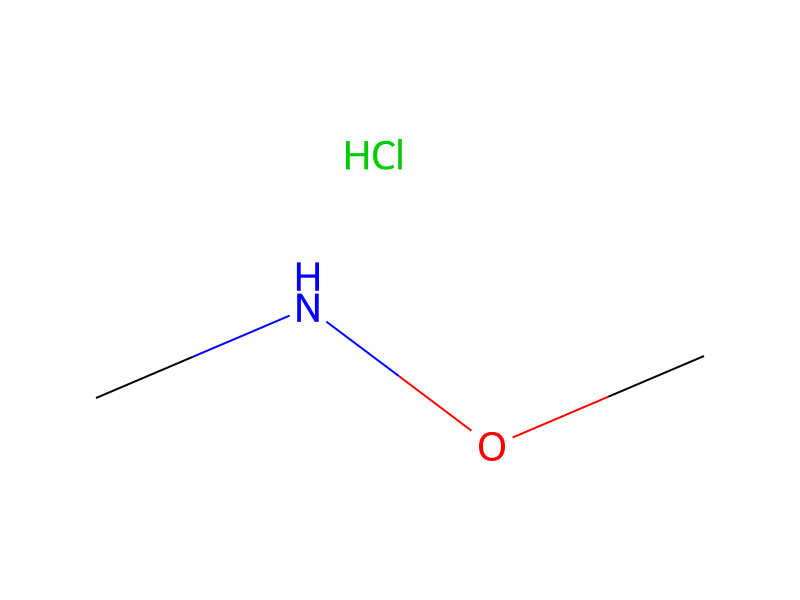
[Br:1][C:2]1[C:3]([Cl:11])=[C:4]([CH:8]=[CH:9][CH:10]=1)[C:5](O)=[O:6].Cl.[CH3:13][NH:14][O:15][CH3:16].Cl.CN(C)CCCN=C=NCC.N1C=CC=CC=1>O1CCCC1>[Br:1][C:2]1[C:3]([Cl:11])=[C:4]([CH:8]=[CH:9][CH:10]=1)[C:5]([N:14]([O:15][CH3:16])[CH3:13])=[O:6]Participants
Reactant 4



Product 1

Reagents, catalysts & solvents 1

Conditions
- Temperature
- 0 °C
Procedure
500 mg of 3-bromo-2-chlorobenzoic acid are placed in 12.5 ml of tetrahydrofuran in a round-bottomed flask. The reaction mixture is cooled to 0° C. with an ice bath and then 228 mg of N,O-dimethylhydroxylamine hydrochloride, 814 mg of 1-(3-dimethylaminopropyl)-3-ethylcarbodiimide hydrochloride and 0.21 ml of pyridine are added thereto. The reaction mixture is subsequently stirred at ambient temperature for 16 h and the solvent is evaporated under reduced pressure. The residue is taken up between water and dichloromethane. The separated organic phase is subsequently washed once with a saturated ammonium chloride solution and once with a saturated sodium hydrogencarbonate solution, then dried over magnesium sulphate and concentrated under reduced pressure. 500 mg of compound are obtained.
Workup
- customthe solvent is evaporated under reduced pressure
- washThe separated organic phase is subsequently washed once with a saturated ammonium chloride solution and once with a saturated sodium hydrogencarbonate solution
- dry with materialdried over magnesium sulphate
- concentrationconcentrated under reduced pressure
Sources & evidence
- ORD record
- ord-5acaa99a930346fe85b5d77528dbcd4e
- Source dataset
- uspto-grants-2012_04
- Patent number
- US08148370B2
Reaction notes
Loading…