Triethylamine → HCID 25235081, compound
Reaction equation

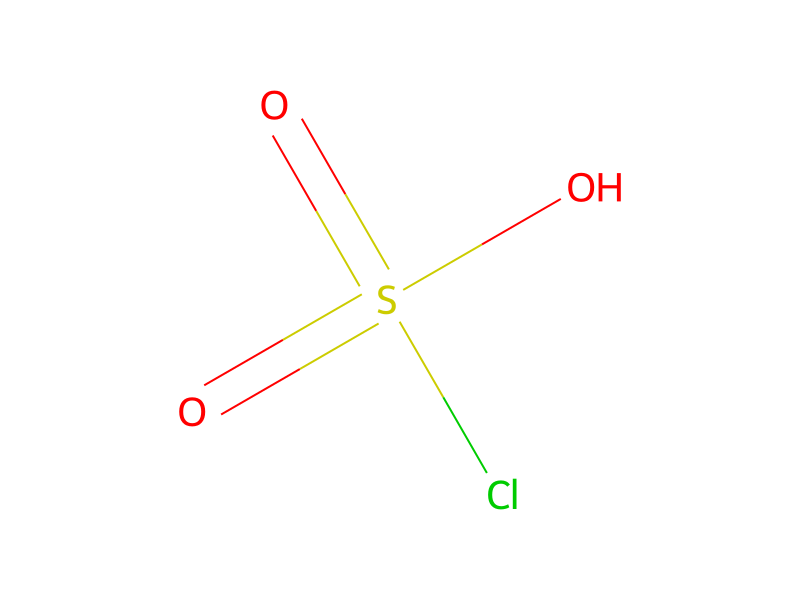
Cl[S:2]([C:5]1[C:6]2[C:7]3[C:11](=[CH:12][CH:13]=1)[NH:10][C:9](=[O:14])[C:8]=3[CH:15]=[CH:16][CH:17]=2)(=[O:4])=[O:3].[NH:18]1[C:26]2[C:21]3[C:22](=[CH:27][CH:28]=[CH:29][C:20]=3C1=O)C=C[CH:25]=2.ClS(O)(=O)=[O:33].Cl.OC1C=C([N+:47]([O-:49])=[O:48])C=CC=1CCN.C(N(CC)CC)C>CN(C)C=O.O>[N+:47]([C:28]1[CH:27]=[CH:22][C:21]([C:26]([NH:18][S:2]([C:5]2[C:6]3[C:7]4[C:11](=[CH:12][CH:13]=2)[NH:10][C:9](=[O:14])[C:8]=4[CH:15]=[CH:16][CH:17]=3)(=[O:4])=[O:3])([OH:33])[CH3:25])=[CH:20][CH:29]=1)([O-:49])=[O:48]Participants
Reactant 5



Product 1

Reagents, catalysts & solvents 2


Conditions
- Temperature
- 60 °C
Procedure
MATERIALS AND METHODS: All solvents were obtained from Fisher unless otherwise noted. 4-Nitrophenylbromide, 3-chlorobenzoylperoxide, benz[cd]indol-2(1H)-one, and chlorosulfonic acid were obtained from Aldrich. Petroleum ether and DMF were obtained from Acros, while triethylamine was obtained from Sigma. TLC analysis was performed on EMD Silica Gel 60 F254 coated plates. Melting points were determined using a Fisher-Johns melting point apparatus and are uncorrected. 1H-NMR analysis was recorded on a Bruker Advance WB 300 MHz instrument with TMS as an internal standard. Mass Spectroscopy was carried out at HT Laboratories (San Diego, Calif.) using electrospray. SYNTHESIS: 4-Nitrostyrene (1). Exactly 13.71 g (0.34 moles) of sodium hydroxide was dissolved in 200 ml anhydrous ethanol. The temperature was raised to 40° C. and 10.0 g (0.043 moles) of 4-nitrophenylbromide was added with stirring. The reaction mixture was heated 40° C. for 30 minutes and then poured into a solution of 40 g of sodium chloride in 200 ml water. The resulting mixture was extracted with 3×25 ml of diethyl ether. The combined organic extracts were dried over magnesium sulfate and the solvent was removed in vacuo. The residue was extracted twice with hot petroleum ether and the combined extracts were placed in the freezer for 72 hours. The crystalline product was filtered and dried under high vacuum. Evaporation of the filtrate gave a second crop of crystals. Total weight of styrene was 5.465 g (84% yield). TLC analysis (1:1 ether/hexane) Rf=0.84. 1H-NMR (d6DMSO): 6.12 (d, 1H, CH2), 6.54 (d, 1H, CH2). 6.89 (dd, 1H, CH), 7.61 (d, 2H, Ar), 8.21 (d, 2H, Ar ortho to NO2). 4-Nitrophenyloxirane (2). A solution consisting of (1) 3.396 g (22.5 mmoles) and 3-chlorobenzoylperoxide 3.881 g (22.5 mmoles) in 40 ml chloroform was stirred at 0-4° C. for 92 hours, then at ambient temperature for 24 hours. Any precipitate that formed during this period was dissolved by the addition of extra chloroform. TLC (1:1 ether/hexane) indicated the complete disappearance of the starting olefin. The solution was washed with 2×15 ml of 10% sodium hydroxide, 20 ml of water, followed by 20 ml of saturated brine. The organic phase was dried with sodium sulfate. Evaporation of the chloroform gave a white residue. This was slurried in 60 ml hexane, filtered and dried under vacuum which yielded 2.383 g (64%). TLC (1:1 ether/hexane) Rf=0.70. Melting point was 80-81° C. 1H-NMR (CDCl3) 2.78 (dd, 1H, CH2), 3.2 (dd, 1H, CH2), 3.97 (t, 1H, CH), 7.46 (d, 2H, Ar), 8.22 (d, 2H, Ar ortho to NO2). 2-Hydroxy-4-nitrophenethylamine hydrochloride (3). Oxirane (2) 0.500 g (3.03 mmoles), 12 ml of 5.05 M methanolic ammonia (60.6 mmoles), and 25 ml anhydrous methanol were sealed in a 130 ml stainless steel bomb. The bomb was stirred at 60° C. for 14 hours and 90 hours at ambient temperature The solvent was removed under reduced pressure and the residue treated with two portions of methanol followed by evaporation in order to remove any remaining ammonia. The residue was dissolved in methanol and acidified with hydrochloric acid, then treated with carbon. The carbon was filtered and the solvent was removed under reduced pressure to yield 0.662 g (60%) of the amine hydrochloride salt. 1H-NMR (d6DMSO) 2.90 (m, 1H, CH2), 3.13 (m, 1H, CH2), 4.99 (t, 1H, CH), 6.42 (d, 1H, OH), 7.62 (d, 2H, Ar), 8.20 (s, 2H, NH2), 8.29 (d, 2H, Ar ortho to NO2). ESIMS calculated for C8H10N2O3 182, found 183 (M+H)+. 6-Chlorosulfonylbenz[cd]indol-2(1H)-one (4). Benz[cd]indol-2(1H)-one (2.523 g; 14.9 mmoles) was added slowly to 5.1 ml of chlorosulfonic acid while keeping the temperature below 15° C. The reaction mixture was heated to 60° C. and held there until no more HCL gas evolved. Then, the reaction mixture was poured into 125 ml of cold water. The resulting solid suspension was extracted twice with ethyl acetate. The combined ethyl acetate extracts were washed with water, saturated sodium bicarbonate, saturated brine, then dried with sodium sulfate. The solvent was removed and the residue was recrystallized from chloroform/ethyl acetate. The yield of the title compound was 1.620 g (41%). A Beilstein test confirmed the presence of the chlorine atom. Melting point was 194-197° C. (dec) 1H-NMR (d6DMSO) 6.86 (d, 1H, Ar), 7.79 (m, 2H, Ar), 7.98 (d, 1H, Ar), 8.72 (d, 1H, Ar), 10.83 (s, 1H, NH). 6-{N-[1-(4-Nitrophenyl)-1-hydroxyethyl]sulfamoyl}benz(cd)indol-2(1H)-one (5). 2-Hydroxy-4-nitrophenethylamine hydrochloride (3) 0.820 g (3.75 mmoles), 4-chlorosulfonylbenz[cd]indol-2(1H)-one (4) 1.004 g (3.75 mmoles) and triethylamine (1.04 ml; 7.5 mmoles) were dissolved in 20 ml anhydrous dimethylformamide with stirring. The reaction was heated at 100° C. for 20 hours. The solvent was removed under reduced pressure. The residue was dissolved in ethyl acetate washed with 0.5 N HCl, water, followed by saturated brine. The ethyl acetate layer was dried with sodium sulfate, the solvent was removed and the residue recrystallized from acetonitrile to yield 1.55 g (21%) of the title compound. TLC (ethyl acetate) Rf=0.68. 1H-NMR, (CD3CN) 3.13-3.29 (m, 2H, CH2), 3.74 (d, 1H, J=3.9 Hz, OH), 4.71 (d, 1H, J=4.5 Hz, NH), 5.91 (t, 1H, CH), 6.94 (d, 1H, J=7.5 Hz), 7.23 (d, 2H, J=8.4 Hz), 7.74-7.93 (m, 3H), 7.98 (dd, 2H, J=2.7 & 6.9 Hz), 8.44 (d, 1H, J=8.4 Hz), 8.86 (s, 1H, NH).
Workup
- customthe temperature below 15° C
- extractionThe resulting solid suspension was extracted twice with ethyl acetate
- washThe combined ethyl acetate extracts were washed with water, saturated sodium bicarbonate, saturated brine
- dry with materialdried with sodium sulfate
- customThe solvent was removed
- customthe residue was recrystallized from chloroform/ethyl acetate
- temperatureThe reaction was heated at 100° C. for 20 hours
- customThe solvent was removed under reduced pressure
- dissolutionThe residue was dissolved in ethyl acetate
- washwashed with 0.5 N HCl, water
- dry with materialThe ethyl acetate layer was dried with sodium sulfate
- customthe solvent was removed
- customthe residue recrystallized from acetonitrile
Sources & evidence
- ORD record
- ord-6399414ed13a4b0092b58a1223f8c586
- Source dataset
- uspto-grants-2012_04
- Patent number
- US08153410B2
Reaction notes
Loading…