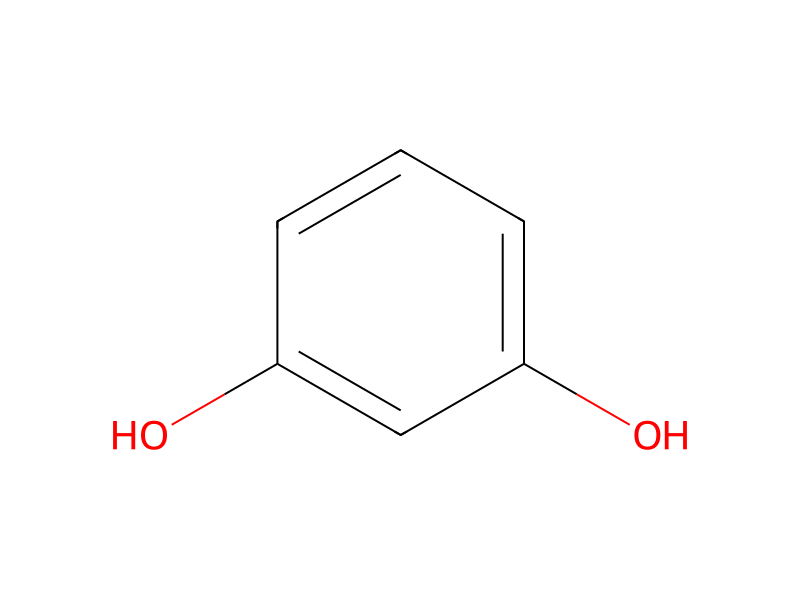
Resorcinol → 3-Chloro-1-(2,4-dihydroxyphenyl)propan-1-one
Reaction equation

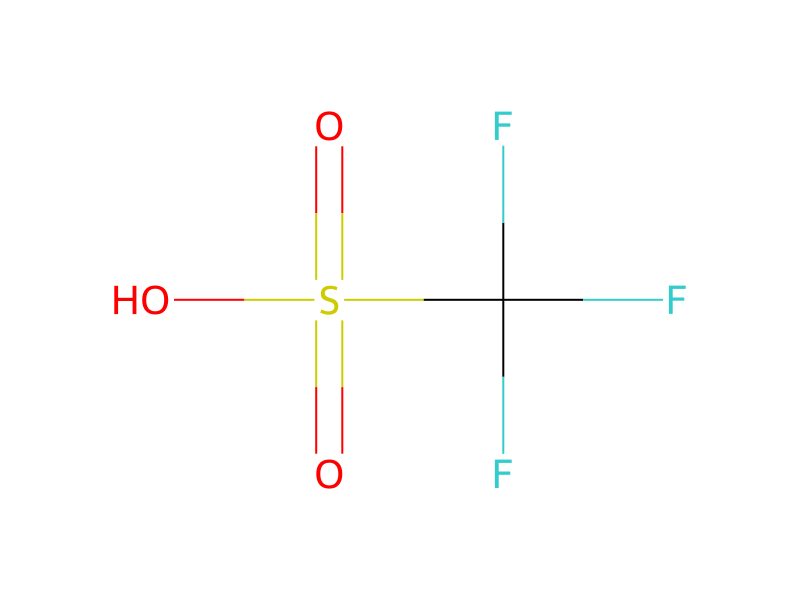
[C:1]1([CH:8]=[CH:7][CH:6]=[C:4]([OH:5])[CH:3]=1)[OH:2].[Cl:9][CH2:10][CH2:11][C:12](O)=[O:13].FC(F)(F)S(O)(=O)=O>C(Cl)Cl>[Cl:9][CH2:10][CH2:11][C:12]([C:6]1[CH:7]=[CH:8][C:1]([OH:2])=[CH:3][C:4]=1[OH:5])=[O:13]Participants
5
Reactant 3

Product 1

Reagents, catalysts & solvents 1

Procedure
To a stirred mixture of resorcinol (5 g, 45.5 mmol) and 3-chloropropionic acid (5.2 g, 48 mmol), is added trifluoromethanesulfonic acid (25 g, 166 mmol) in one portion. The mixture is stirred at room temperature for 10 min, then heated at 80° C. for 30 min. The reaction is cooled to room temperature and the mixture is diluted with DCM (200 mL). The solution is slowly poured into ice water (200 mL). The bi-layer is separated, and the aqueous phase is extracted with DCM (2×40 mL). The combined organic phase is washed with brine and dried over sodium sulfate. The crude 3-chloro-1-(2,4-dihydroxy-phenyl)-propan-1-one is obtained as orange solid (6.9 g) after evaporation of solvent and carried on as is.
Workup
- temperatureheated at 80° C. for 30 min
- temperatureThe reaction is cooled to room temperature
- customThe bi-layer is separated
- extractionthe aqueous phase is extracted with DCM (2×40 mL)
- washThe combined organic phase is washed with brine
- dry with materialdried over sodium sulfate
Sources & evidence
- ORD record
- ord-54de0088aa5642f6bb182ac76f7cab31
- Source dataset
- uspto-grants-2012_04
- Patent number
- US08153671B2
Reaction notes
Loading…