Acetic Acid → 2-Amino-5-Chloro-N,3-Dimethylbenzamide
Reaction equation

C(OCC)(=O)C.C(O)(=O)C.[CH3:11][NH2:12].[Cl:13][C:14]1[CH:15]=[C:16]([CH3:26])[C:17]2[NH:22]C(=O)[O:20][C:19](=O)[C:18]=2[CH:25]=1>O>[NH2:22][C:17]1[C:16]([CH3:26])=[CH:15][C:14]([Cl:13])=[CH:25][C:18]=1[C:19]([NH:12][CH3:11])=[O:20]Participants
Reactant 4

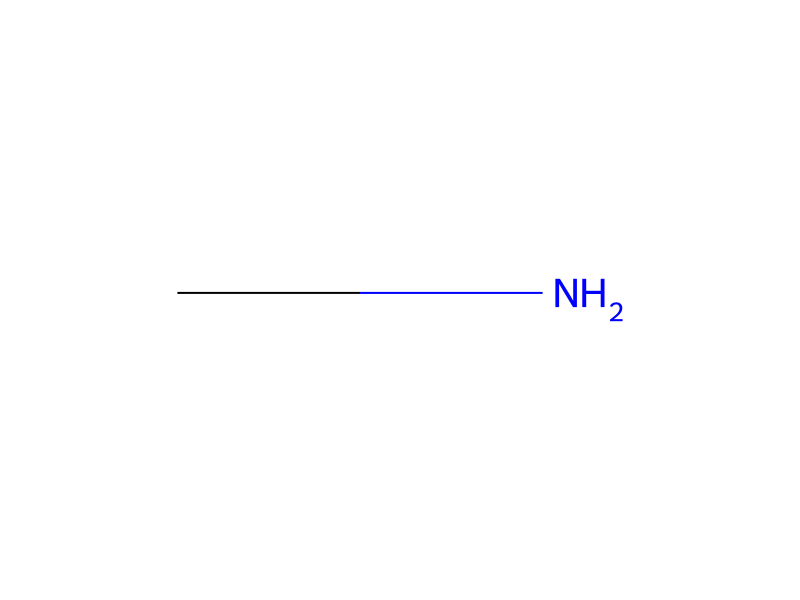


Product 1

Reagents, catalysts & solvents 1

Conditions
- Temperature
- 37.5 °C
Procedure
A 300-mL flask equipped with a thermometer and nitrogen bubbler was charged with ethyl acetate (100 mL) and 12.6 g (0.21 mol) of acetic acid. Anhydrous methylamine (6.3 g, 0.20 mol) was added below the surface of the liquid mixture, which was cooled to maintain the temperature below 35° C. Then 6-chloro-8-methyl-2H-3,1-benzoxazine-2,4(1H)-dione (21 g, 0.10 mol) (i.e. the product of Example 1) was added in portions while maintaining the reaction mixture at 35-40° C. After completion of the addition of the 6-chloro-8-methyl-2H-3,1-benzoxazine-2,4(1H)-dione the temperature was maintained at 40-45° C., and the progress of the reaction was monitored by HPLC analysis. After about 20 minutes, when no more than 0.5% 6-chloro-8-methyl-2H-3,1-benzoxazine-2,4(1H)-dione remained, water (50 mL) was added. A distillation head was attached, moderate vacuum was applied, and ethyl acetate was distilled out at an internal temperature of about 46-60° C. and pressure of about 30 to 50 kPa. To replace the ethyl acetate removed by distillation, water was added to maintain the original liquid volume in the reactor. When a significant amount of water began to distill, the aqueous slurry was cooled to 10° C. The solid was collected by filtration and dried at 60° C. and 13.3 kPa to afford the title compound as a white crystalline solid (19 g, ca. 95% yield, >98% purity by peak area in HPLC analysis).
Workup
- customA 300-mL flask equipped with a thermometer and nitrogen bubbler
- temperaturewas cooled
- temperatureto maintain the temperature below 35° C
- temperaturewas maintained at 40-45° C.
- distillationethyl acetate was distilled out at an internal temperature of about 46-60° C. and pressure of about 30 to 50 kPa
- customremoved by distillation, water
- additionwas added
- temperatureto maintain the original liquid volume in the reactor
- distillationto distill
- temperaturethe aqueous slurry was cooled to 10° C
- filtrationThe solid was collected by filtration
- customdried at 60° C.
Sources & evidence
- ORD record
- ord-255464e7c51f46f688e923fa60e16a09
- Source dataset
- uspto-grants-2012_04
- Patent number
- US08153844B2
Reaction notes
Loading…