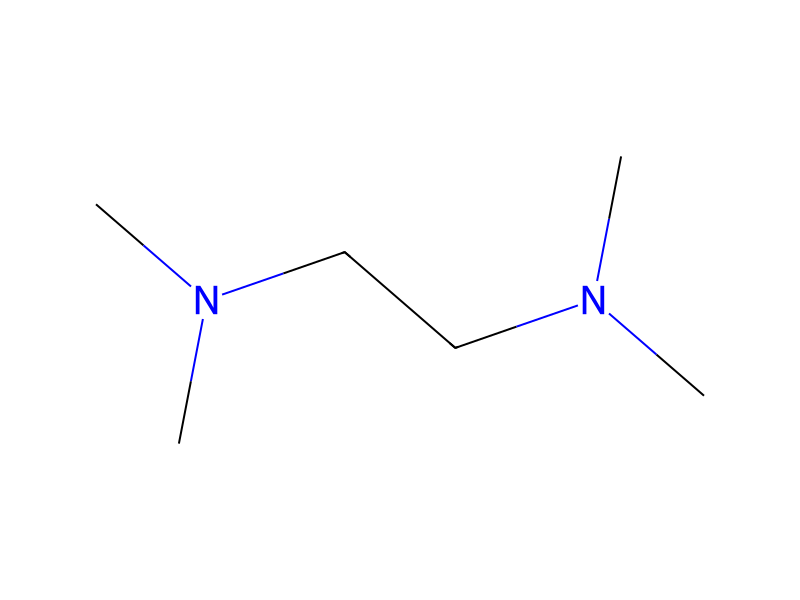
N,N,N',N'-Tetramethylethylenediamine → HCID 67278538, compound
Reaction equation

[Li][CH:2]([CH2:4][CH3:5])[CH3:3].C1CCCCC1.[Cl:12][C:13]1C(Cl)=CC=C[C:14]=1[CH2:15][N:16]1[CH2:20][CH2:19][CH2:18][CH2:17]1.[CH3:26][N:27]([CH2:29]CN(C)C)C.[O:34]=[C:35]1[CH2:38][CH:37]([C:39]([OH:41])=O)[CH2:36]1.[ClH:42].CNC.F[P-](F)(F)(F)(F)F.N1(O[P+](N(C)C)(N(C)C)N(C)C)C2C=CC=CC=2N=N1>C1COCC1>[Cl:42][C:3]1[C:13]([Cl:12])=[C:14]([CH2:15][N:16]2[CH2:17][CH2:18][CH2:19][CH2:20]2)[CH:5]=[CH:4][C:2]=1[C:35]1([OH:34])[CH2:38][CH:37]([C:39]([N:27]([CH3:29])[CH3:26])=[O:41])[CH2:36]1Participants
Reactant 7



Product 1

Reagents, catalysts & solvents 1

Conditions
- Temperature
- -87.5 °C
Procedure
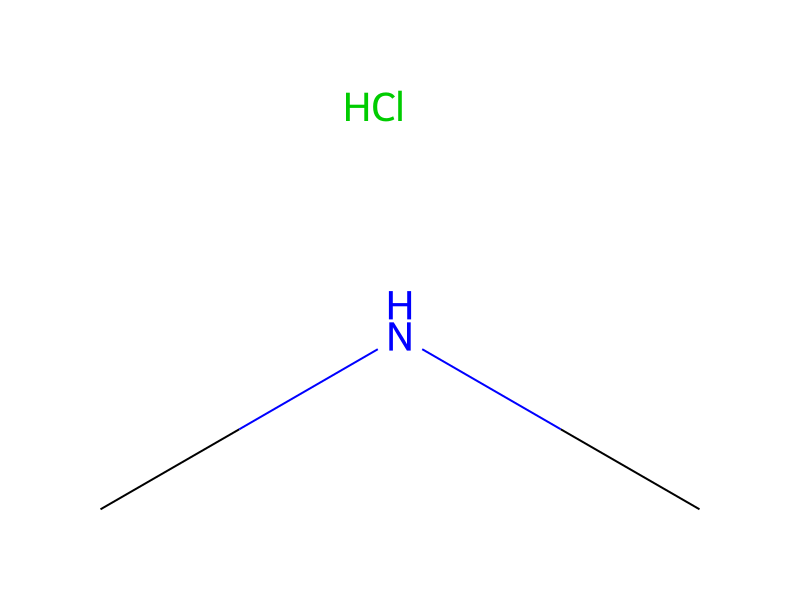
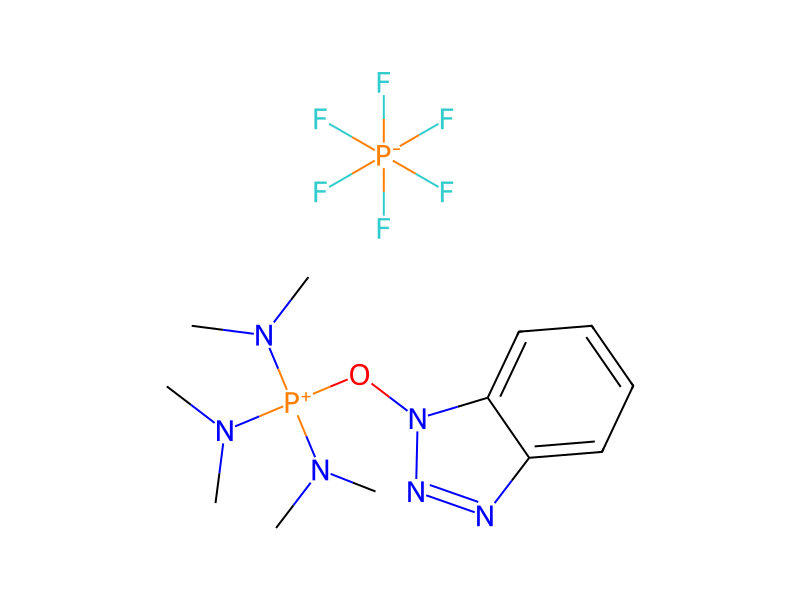
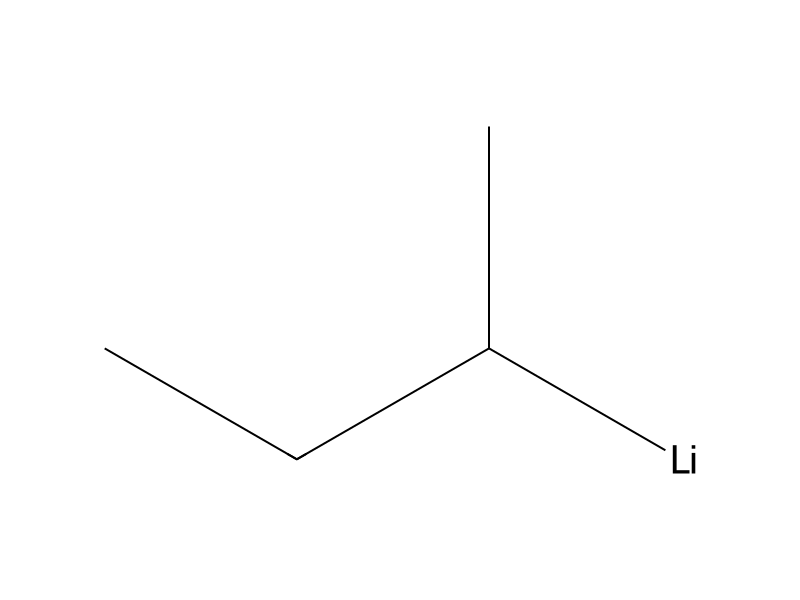
A 1.3 M solution of s-BuLi in cyclohexane (3.7 mL, 4.8 mmol) was added over 5 min to a solution of Intermediate 1, 1-(2,3-dichlorobenzyl)pyrrolidine (1.0 g, 4.4 mmol) and TMEDA (0.73 ml, 4.8 mmol) in absolute THF (10 ml) in a flow of argon at −90 to −100° C. The reaction mixture was stirred at −85 to −90° C. for 30 min. Then a solution of 3-oxocyclobutanecarboxylic acid (250 mg, 2.2 mmol), (J. Org. Chem. 1988, 53, 3841 and J. Org. Chem. 1996, 61, 2174) in THF (2 mL) was added drop wise over 2 min at −100° C. The mixture was then warmed to 0° C. for 30 min and evaporated to dryness. The residue was dissolved in DMF (10 mL), and dimethylamine hydrochloride (410 mg, 5.0 mmol) was added. Then BOP (1.3 g, 3.0 mmol) was added in portions under cooling in an ice bath. The reaction mixture was stirred for 16 h at room temperature. The disappearance of the starting hydroxy acid was monitored by LC/MS. The reaction mass was evaporated to dryness under 1 mmHg. Water (10 mL), Et2O (15 mL), and a saturated solution of K2CO3 (5 mL) were added. The layers were separated, and the aqueous one was subjected to extraction with Et2O (2×20 mL). The combined organic layer was dried with Na2SO4, and evaporated. The residue was purified by chromatography (30 mL of silica gel 63/100 μm, CHCl3/MeOH 100:0→90:10). The product containing fractions were collected, concentrated under reduced pressure to yield the title compound (0.30 g, 37%). LC/MS data: 371.0, 372.0, 373.0 (M+H) (calculated for C18H24Cl2N2O2 371.31); 1H NMR data (DMSO-d6): δ 7.57 (d, 1H, ArH, J=8.0 Hz), 7.43 (d, 1H, ArH, J=8.0 Hz), 5.59 (s, 1H, OH), 3.71 (s, 2H, CH2Ar), 2.88-2.97 (m, 2H), 2.86 (s, 3H NMe), 2.82 (s, 3H, NMe), 2.67-2.78 (m, 1H), 2.50-2.57 (m, 6H+DMSO), 1.67-1.77 (m, 4H). The HCl salt was made using HCl, ether. A 8 mL screw cap vial was charged with 3-[2,3-dichloro-4-(pyrrolidin-1-ylmethyl)phenyl]-3-hydroxy-N,N-dimethylcyclobutanecarboxamide (60 mg, 0.161 mmol) and 0.5 mL of MeOH. Then 0.2 mL of 2M HCl in ether was added, evaporated and dried to give oil, which was redissolved in 1 mL of DCM, evaporated and dried to give 62 mg of white hygroscopic solid of HCl salt. LCMS (M+H): 371.1; 1H NMR (300 MHz, DMSO-d8): δ 10.57 (br. s, 1H), 7.80 (d, J=8.1 Hz, 1H), 7.73 (d, J=8.2 Hz, 1H), 4.57 (d, J=5.64 Hz, 2H), 3.50-3.70 (m, 3H), 3.40-3.50 (m, 3H), 2.90-2.97 (m, 2H), 2.86 (s, 3H), 2.83 (s, 3H), 2.69-2.75 (m, 1H), 2.03-2.07 (m, 2H), 1.80-1.94 (m, 2H).
Workup
- temperatureThe mixture was then warmed to 0° C. for 30 min
- customevaporated to dryness
- dissolutionThe residue was dissolved in DMF (10 mL)
- temperatureunder cooling in an ice bath
- stirringThe reaction mixture was stirred for 16 h at room temperature
- customThe reaction mass was evaporated to dryness under 1 mmHg
- additionWater (10 mL), Et2O (15 mL), and a saturated solution of K2CO3 (5 mL) were added
- customThe layers were separated
- extractionthe aqueous one was subjected to extraction with Et2O (2×20 mL)
- dry with materialThe combined organic layer was dried with Na2SO4
- customevaporated
- customThe residue was purified by chromatography (30 mL of silica gel 63/100 μm, CHCl3/MeOH 100:0→90:10)
- additionThe product containing fractions
- customwere collected
- concentrationconcentrated under reduced pressure
Sources & evidence
- ORD record
- ord-fece96208e43403b843c3a3a45a35ab3
- Source dataset
- uspto-grants-2012_04
- Patent number
- US08158673B2
Reaction notes
Loading…