1-Bromooctane → Glyceryl octyl ascorbic acid
Reaction equation

[CH2:1]([O:6][C:7]1[C@@H:12]([C@H:13]([CH2:15][OH:16])[OH:14])[O:11][C:9](=[O:10])[C:8]=1[OH:17])[CH:2]([CH2:4][OH:5])[OH:3].C(=O)([O-])O.[Na+].[CH2:23](Br)[CH2:24][CH2:25][CH2:26][CH2:27][CH2:28][CH2:29][CH3:30]>CS(C)=O>[CH2:1]([O:6][C:7]1[C@@H:12]([C@H:13]([CH2:15][OH:16])[OH:14])[O:11][C:9](=[O:10])[C:8]=1[O:17][CH2:23][CH2:24][CH2:25][CH2:26][CH2:27][CH2:28][CH2:29][CH3:30])[CH:2]([CH2:4][OH:5])[OH:3]Participants
Reactant 3
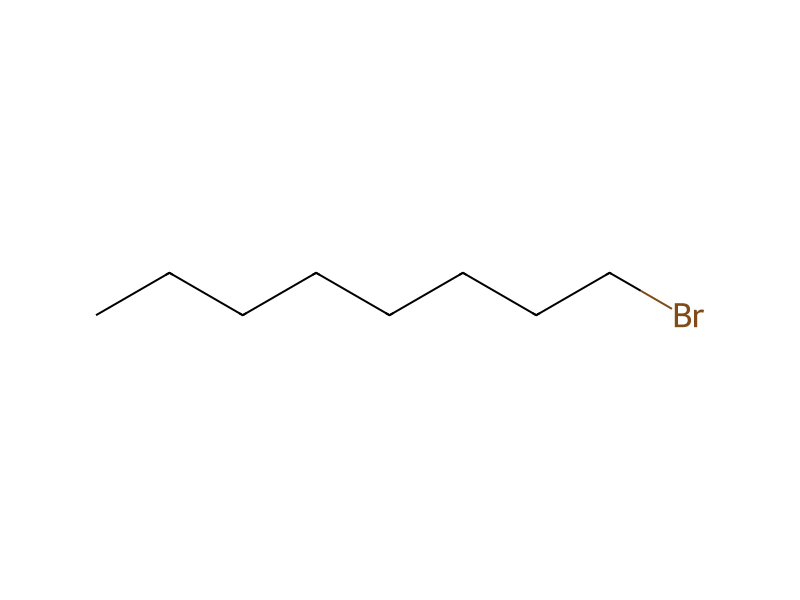


Product 1

Reagents, catalysts & solvents 1

Procedure
Under an argon atmosphere, 3-O-glyceryl ascorbic acid (54.1 g) obtained in Example 1 was stirred in DMSO (200 mL), and further, sodium hydrogen carbonate (18.5 g) was added and the mixture was stirred at room temperature for 30 minutes. Thereafter, octyl bromide (63.7 g) was added and the mixture was heated up to 100° C. and stirred for 3 hours, followed by extraction with ethyl acetate. Then, the extracted liquid was dried over anhydrous sodium sulfate, and concentrated under reduced pressure, and 131 g of the resultant residue was subjected to silica gel column chromatography. Elution was performed with chloroform/methanol/water(volume ratio:10/3/0.4), and concentration was performed under reduced pressure to obtain 3-O-glyceryl-2-O-octyl ascorbic acid (48.0 g).
Workup
- temperaturethe mixture was heated up to 100° C.
- stirringstirred for 3 hours
- extractionfollowed by extraction with ethyl acetate
- dry with materialThen, the extracted liquid was dried over anhydrous sodium sulfate
- concentrationconcentrated under reduced pressure, and 131 g of the resultant residue
- washElution
- concentrationwas performed with chloroform/methanol/water(volume ratio:10/3/0.4), and concentration
Sources & evidence
- ORD record
- ord-bb3b254aa44549898d5e82008234d856
- Source dataset
- uspto-grants-2012_04
- Patent number
- US08163939B2
Reaction notes
Loading…