Potassium Carbonate → 4-(4-Benzylpiperazin-1-yl)-2-chloropyrimidine
Reaction equation

[Cl:1][C:2]1[N:7]=[C:6](Cl)[CH:5]=[CH:4][N:3]=1.[C:9]1([CH2:15][N:16]2[CH2:21][CH2:20][NH:19][CH2:18][CH2:17]2)[CH:14]=[CH:13][CH:12]=[CH:11][CH:10]=1.C(=O)([O-])[O-].[K+].[K+]>O>[Cl:1][C:2]1[N:7]=[C:6]([N:19]2[CH2:20][CH2:21][N:16]([CH2:15][C:9]3[CH:10]=[CH:11][CH:12]=[CH:13][CH:14]=3)[CH2:17][CH2:18]2)[CH:5]=[CH:4][N:3]=1Participants
5
Reactant 3

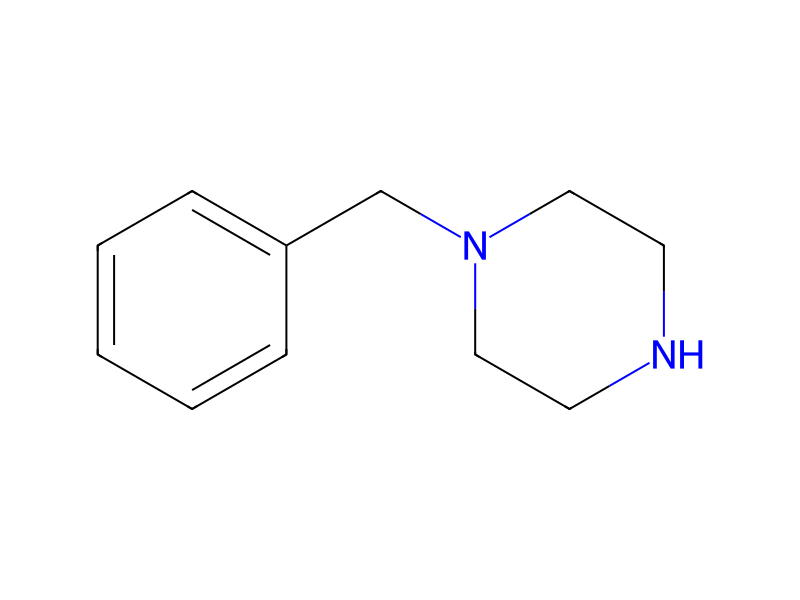

Product 1

Reagents, catalysts & solvents 1

Conditions
- Temperature
- 40 °C
Procedure
A mixture of 9.9 g (0.0664 mol) of 2,4-dichloropyrimidine, 200 ml of water and 11.7 ml (0.0673 mol) of 1-(phenylmethyl)piperazine was heated to 40° C. for 2 hours in an ultrasound bath. After cooling the mixture was made alkaline with potassium carbonate and extracted thoroughly with ethyl acetate. The crude product obtained after working up in the usual way was purified by column chromatography over silica gel (30-60 μm) using FM2 and FM4 (2/1 v/v) as eluant. Working up the appropriate fractions yielded 7.4 g (38.6% of theory) of a colourless oil, Rf=0.51 (FM4; Macherey-Nagel POLYGRAMO® SIL G/UV254, ready-made films for TLC).
Workup
- temperatureAfter cooling the mixture
- extractionextracted thoroughly with ethyl acetate
Sources & evidence
- ORD record
- ord-3094a39b643b4659903f62eb716630be
- Source dataset
- uspto-grants-2002_02
- Patent number
- US06344449B1
Reaction notes
Loading…