Cyclopentanol → Cyclopentyl 1-(6-chloro-2,3,4,9-tetrahydro-1H-beta-carbolin-1-yl)cyclobutanecarboxylate Hydrochloride
Reaction equation

Cl.[Cl:2][C:3]1[CH:4]=[C:5]2[C:13](=[CH:14][CH:15]=1)[NH:12][C:11]1[CH:10]([C:16]3([C:20]([O:22][CH2:23][CH3:24])=[O:21])[CH2:19][CH2:18][CH2:17]3)[NH:9][CH2:8][CH2:7][C:6]2=1.[CH:25]1(O)[CH2:29]CC[CH2:26]1>O.CC(C)[O-].CC(C)[O-].CC(C)[O-].CC(C)[O-].[Ti+4]>[ClH:2].[Cl:2][C:3]1[CH:4]=[C:5]2[C:13](=[CH:14][CH:15]=1)[NH:12][C:11]1[CH:10]([C:16]3([C:20]([O:22][CH:23]4[CH2:29][CH2:25][CH2:26][CH2:24]4)=[O:21])[CH2:17][CH2:18][CH2:19]3)[NH:9][CH2:8][CH2:7][C:6]2=1Participants
5
Reactant 2
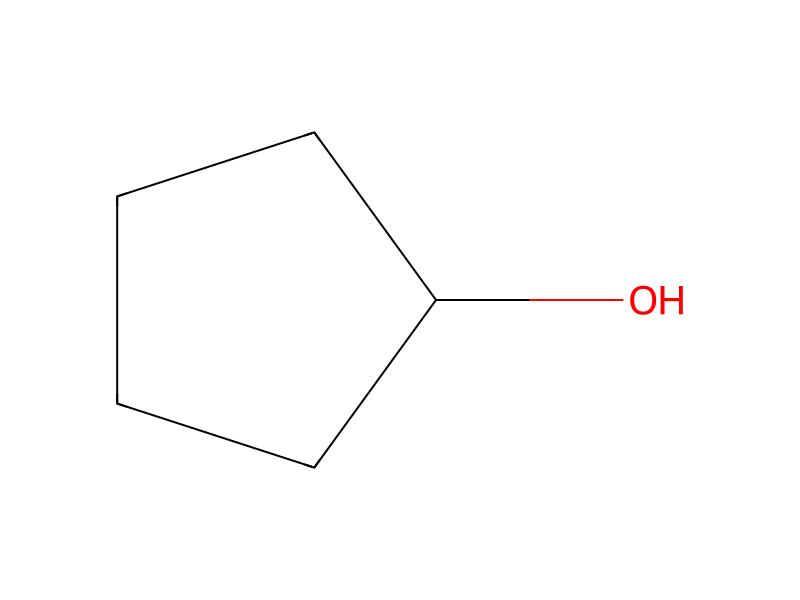

Product 1

Reagents, catalysts & solvents 2


Procedure
4.0 g of the compound of Example 1 are heated at the reflux of 80 ml of cyclopentanol in the presence of 1 ml of titanium tetraisopropoxide. After reaction for 24 hours, the reaction mixture is diluted with water and then filtered. After extraction with dichloromethane, drying and evaporation under reduced pressure, crystallisation of the residue from an ethanol-diethyl ether-hydrogen chloride mixture enables the expected product to be isolated.
Workup
- customAfter reaction for 24 hours
- filtrationfiltered
- extractionAfter extraction with dichloromethane
- customdrying
- customevaporation
- customunder reduced pressure, crystallisation of the residue from an ethanol-diethyl ether-hydrogen chloride mixture
- customto be isolated
Sources & evidence
- ORD record
- ord-e4421ef6078f48b99198835e66621569
- Source dataset
- uspto-grants-2002_02
- Patent number
- US06350757B1
Reaction notes
Loading…