Benzene → Anthraquinone
Reaction equation

[C:1]1(=[O:11])[O:6][C:4](=O)[C:3]2=[CH:7][CH:8]=[CH:9][CH:10]=[C:2]12.C(Cl)Cl.B(F)(F)F.[CH:19]1[CH:24]=[CH:23][CH:22]=[CH:21][CH:20]=1>S(=O)(=O)(O)O.O>[CH:10]1[C:2]2[C:1](=[O:11])[C:24]3[C:19](=[CH:20][CH:21]=[CH:22][CH:23]=3)[C:4](=[O:6])[C:3]=2[CH:7]=[CH:8][CH:9]=1Participants
Reactant 4


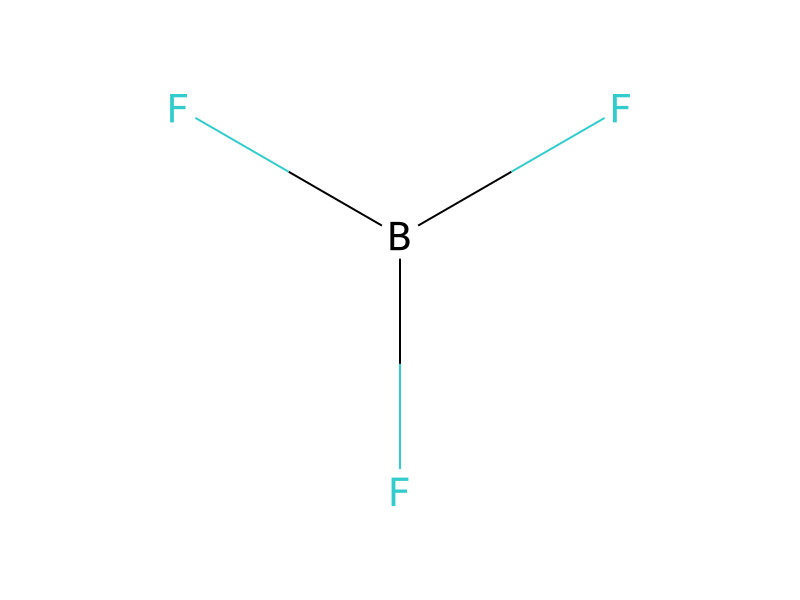
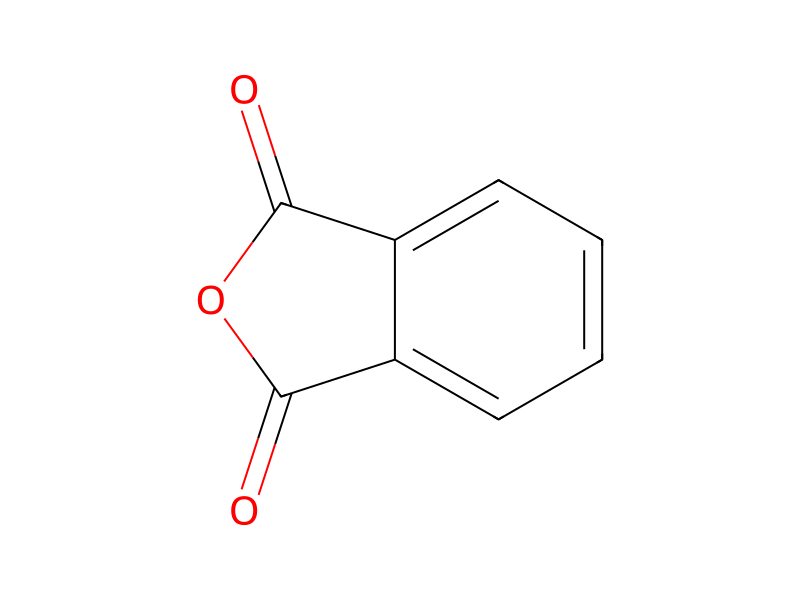
Product 1
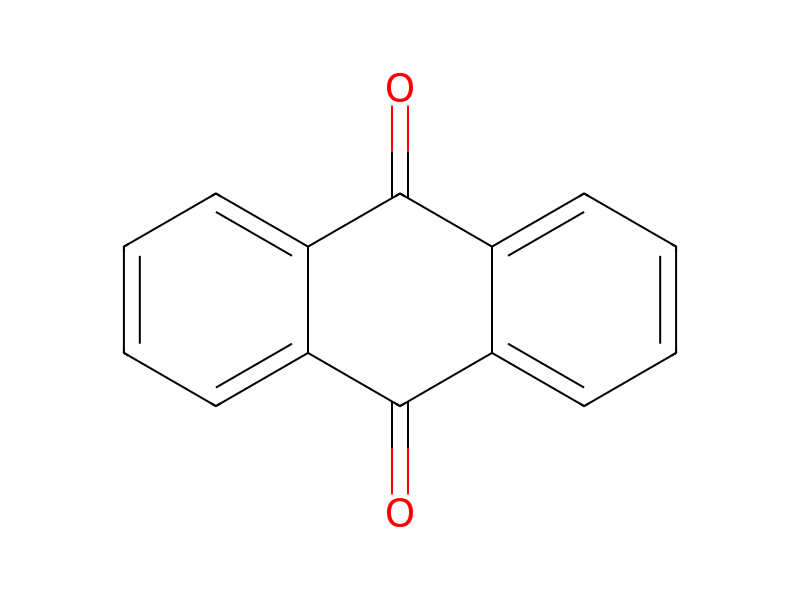
Reagents, catalysts & solvents 2


Conditions
- Temperature
- -40 °C
Procedure
22.2 g of phthalic anhydride (0.15 mole) were charged into a stainless steel autoclave at ambient temperature with 10 cm3 of methylene chloride. The autoclave was cooled with liquid nitrogen. 30 g of HF (1.5 mole) and 102 g of BF3 (1.5 mole) were introduced. The temperature was brought to -40° C. and 12.9 g of benzene (0.165 mole) were introduced during 15 minutes. The temperature was maintained at -40° C. for one hour under 15 bars pressure, followed by decompression and degasification under vacuum to evaporate HF, BF3 and CH2Cl2 ; 10% caustic soda was then added to give a pH of 9. The solution was filtered, then acidified by addition of concentrated HCl. The O.B.B. acid precipitated in the form of very pure white crystals. The whole of the O.B.B. acid obtained was treated for 1 hour at 150° C. in 100% sulfuric acid. After cooling and dilution with water, 25.6 g of anthraquinone of 99.8% purity were obtained, i.e., an overall chemical yield of 82%.
Workup
- temperatureThe autoclave was cooled with liquid nitrogen
- customwas brought to -40° C.
- customfollowed by decompression and degasification under vacuum
- customto evaporate HF, BF3 and CH2Cl2
- addition10% caustic soda was then added
- customto give a pH of 9
- filtrationThe solution was filtered
- additionacidified by addition of concentrated HCl
- customacid precipitated in the form of very pure white crystals
- customacid obtained
- temperatureAfter cooling
Sources & evidence
- ORD record
- ord-1d281a4e4b5e4751ae53e4ba2e51e5df
- Source dataset
- uspto-grants-1983_04
- Patent number
- US04379092
Reaction notes
Loading…