Propargyl alcohol → 3-Hydroxy-1-[4-chloro-2-benzoylphenyl]propyne
Reaction equation

C1(P(C2C=CC=CC=2)C2C=CC=CC=2)C=CC=CC=1.[Cl:20][C:21]1[CH:22]=[CH:23][C:24](I)=[C:25]([CH:34]=1)[C:26]([C:28]1[CH:33]=[CH:32][CH:31]=[CH:30][CH:29]=1)=[O:27].[CH2:36]([OH:39])[C:37]#[CH:38]>[Pd](Cl)Cl.C(NCC)C>[OH:39][CH2:36][C:37]#[C:38][C:24]1[CH:23]=[CH:22][C:21]([Cl:20])=[CH:34][C:25]=1[C:26](=[O:27])[C:28]1[CH:33]=[CH:32][CH:31]=[CH:30][CH:29]=1Participants
6





Procedure
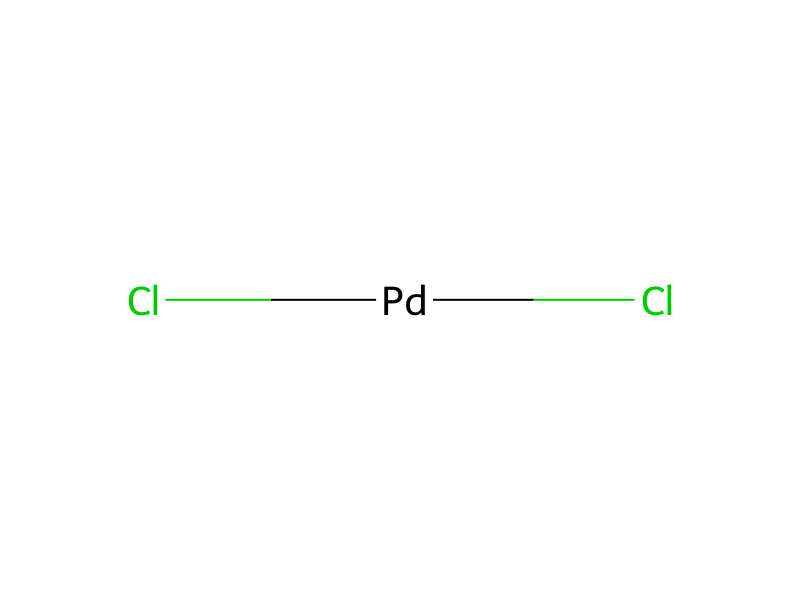
A mixture of 0.17 g (1.0 mmole) of palladium chloride, 0.5 g (2.0 mmole) of triphenylphosphine, 0.1 g (0.5 mmole) of cuprous iodide, 15 g (43 mmole) of 5-chloro-2-iodobenzophenone and 60 ml of diethylamine was stirred at room temperature for 20 min. In one portion 6.0 g (107 mmole) of propargyl alcohol was added, and the resulting mixture was stirred for 24 hr. The solvent was removed at reduced pressure and the residue was dissolved in ether. The ether solution was washed with water, dried with anhydrous sodium sulfate, and concentrated at reduced pressure to give the product as a red oil.
Workup
- stirringthe resulting mixture was stirred for 24 hr
- customThe solvent was removed at reduced pressure
- dissolutionthe residue was dissolved in ether
- washThe ether solution was washed with water
- dry with materialdried with anhydrous sodium sulfate
- concentrationconcentrated at reduced pressure
Sources & evidence
- ORD record
- ord-ed133d85e14f488683e8db2ba00900e8
- Source dataset
- uspto-grants-1983_04
- Patent number
- US04379090
Reaction notes
Loading…