Hydrochloric Acid → HCID 12922708, compound
Reaction equation

[Br:1][C:2]1[CH:3]=[C:4]([CH:7]=[CH:8][C:9]=1[F:10])[CH2:5][OH:6].[CH2:11](Cl)[C:12]1[CH:17]=[CH:16][CH:15]=[CH:14][CH:13]=1.O.Cl>O1CCCC1>[CH2:11]([O:6][CH2:5][C:4]1[CH:7]=[CH:8][C:9]([F:10])=[C:2]([Br:1])[CH:3]=1)[C:12]1[CH:17]=[CH:16][CH:15]=[CH:14][CH:13]=1Participants
Reactant 4



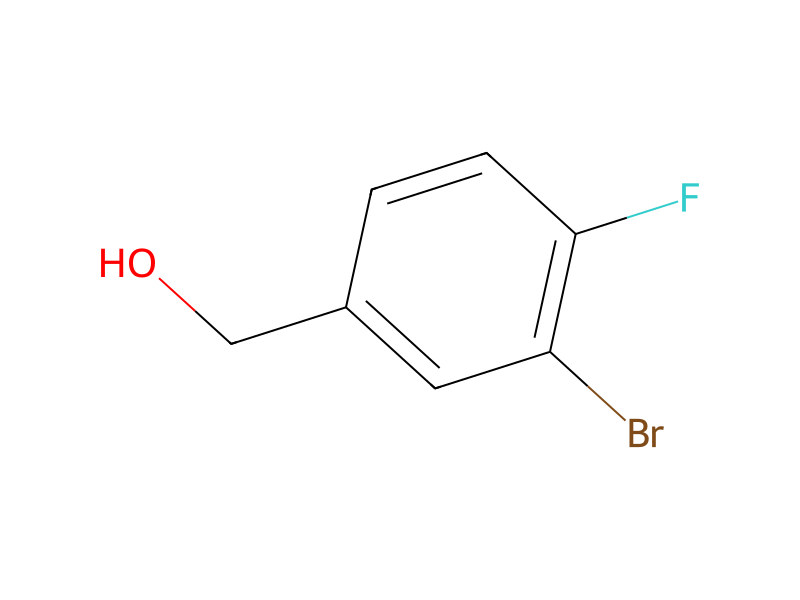
Product 1

Reagents, catalysts & solvents 1

Conditions
- Temperature
- 40 °C
Procedure
20.5 g (0.1 mol) of 3-bromo-4-fluoro-benzyl alcohol were added to a solution of 12.3 g (0.11 mol) of potassium tert.-butylate in 200 ml of tetrahydrofuran at 20° C. During this addition, the temperature increased to about 40° C. The mixture was subsequently stirred at 20° C. for about 1 hour and 12.6 g (0.1 mol) of benzyl chloride were then added dropwise to the reaction mixture. Thereafter, the mixture was heated under reflux for one hour. It was then cooled. About 200 ml of water and 50 ml of concentrated hydrochloric acid were added to the reaction mixture and the mixture was extracted twice with 200 ml of diethyl ether each time. The combined extracts were concentrated, dried over sodium sulphate and then subjected to fractional distillation. 14.2 g (48.2% of theory) of 3-bromo-4-fluoro-benzyl benzyl ether were obtained in the form of a light yellow oil of boiling point 165° C./7 mbars.
Workup
- additionDuring this addition
- temperatureThereafter, the mixture was heated
- temperatureunder reflux for one hour
- temperatureIt was then cooled
- extractionthe mixture was extracted twice with 200 ml of diethyl ether each time
- concentrationThe combined extracts were concentrated
- dry with materialdried over sodium sulphate
- distillationsubjected to fractional distillation
Sources & evidence
- ORD record
- ord-ab1c26cead4c449d97cfff3295ffd70d
- Source dataset
- uspto-grants-1983_04
- Patent number
- US04381412
Reaction notes
Loading…