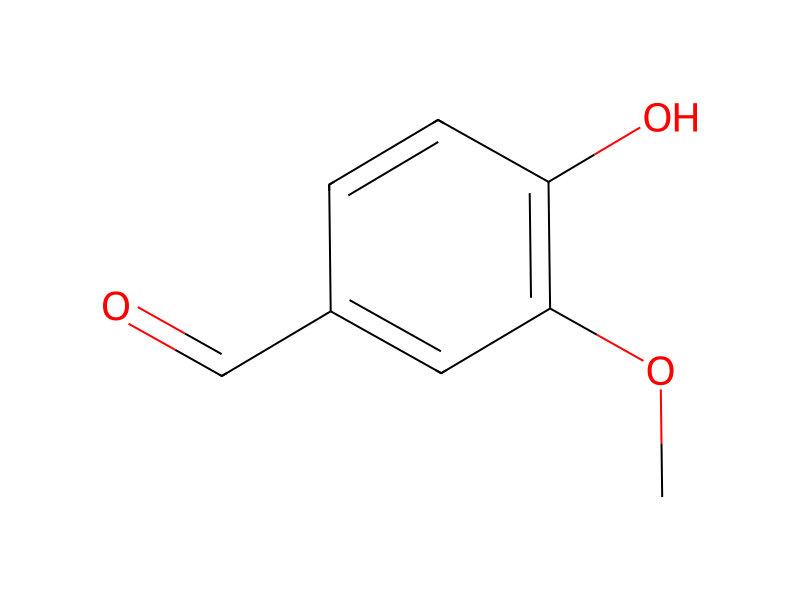
Vanillin → Catechol
Reaction equation

O=C[C:3]1[CH:11]=[CH:10][C:8]([OH:9])=[C:5]([O:6][CH3:7])[CH:4]=1>[Ni]>[C:5]1([O:6][CH3:7])[C:8](=[CH:10][CH:11]=[CH:3][CH:4]=1)[OH:9].[C:5]1([C:8](=[CH:10][CH:11]=[CH:3][CH:4]=1)[OH:9])[OH:6]Participants
4
Reactant 1
Product 2


Reagents, catalysts & solvents 1

Procedure
It is known that aromatic aldehydes decarbonylate when heated over hydrogenation catalysts. Of the aromatic aldehydes containing a phenolic group, vanillin is reported to decarbonylate over nickel at 370°-390° C., giving guaiacol and catechol. It is reported (Synthesis, December, 1969, p. 164) that salicylaldehyde in refluxing toluene and in the presence of a stoichiometric amount of chloro-tris(triphenyl phosphine)-rhodium complex yields phenol in 70% yield.
Workup
- temperatureheated over hydrogenation catalysts
Sources & evidence
- ORD record
- ord-91dee153a6a54f60b357a15d7f8efaa4
- Source dataset
- uspto-grants-1982_09
- Patent number
- US04351962
Reaction notes
Loading…