Hydrochloric Acid → HCID 70595930, compound
Reaction equation

[Cl:1][CH2:2][C:3]1[CH:8]=[CH:7][C:6]([C:9]2[C:13]3[CH:14]=[CH:15][CH:16]=[CH:17][C:12]=3[S:11][N:10]=2)=[CH:5][CH:4]=1.[S].[NH2:19][CH2:20][CH2:21][CH2:22][NH2:23].Cl>C1(C)C=CC=CC=1>[ClH:1].[NH:19]1[CH:20]=[CH:21][CH2:22][NH:23][CH:2]1[C:3]1[CH:8]=[CH:7][C:6]([C:9]2[C:13]3[CH:14]=[CH:15][CH:16]=[CH:17][C:12]=3[S:11][N:10]=2)=[CH:5][CH:4]=1Participants
6
Reactant 4

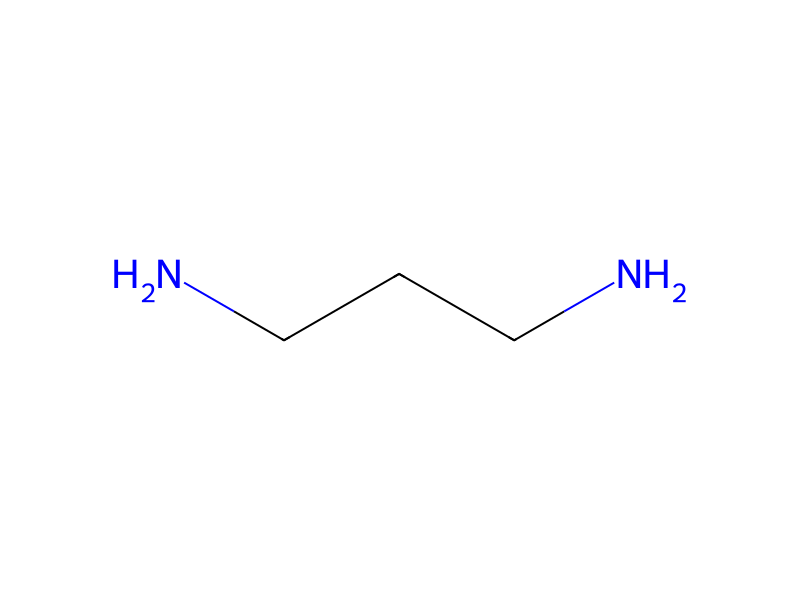


Product 1

Reagents, catalysts & solvents 1

Procedure
26 g of 3-(4-chloromethylphenyl)-1,2-benzisothiazole, 6.4 g of sulfur and 300 ml of toluene are heated to 50° C. 15 g of 1,3-diaminopropane are added slowly at the same temperature. The reaction mixture is then stirred for 20 hours under reflux. 20 g of hydrogen chloride gas are then passed in over one hour, the mixture is cooled to room temperature and the resulting solid is filtered off. After recrystallization from water in the presence of active charcoal, 18 g of 3-[4-tetrahydropyrimidin-2-yl)-phenyl]-1,2-benzisothiazole hydrochloride, melting, with decomposition, at 314° C., are obtained. The yield corresponds to 54.6% of theory.
Workup
- temperatureunder reflux
- customare then passed in over one hour
- filtrationthe resulting solid is filtered off
- customAfter recrystallization from water in the presence of active charcoal, 18 g of 3-[4-tetrahydropyrimidin-2-yl)-phenyl]-1,2-benzisothiazole hydrochloride
- custommelting, with decomposition, at 314° C.
- customare obtained
Sources & evidence
- ORD record
- ord-bc8df0ecb48e493f974dc28a00910015
- Source dataset
- uspto-grants-1980_06
- Patent number
- US04206217
Reaction notes
Loading…