Acetic Acid → 4-Hydroxybenzaldehyde
Reaction equation

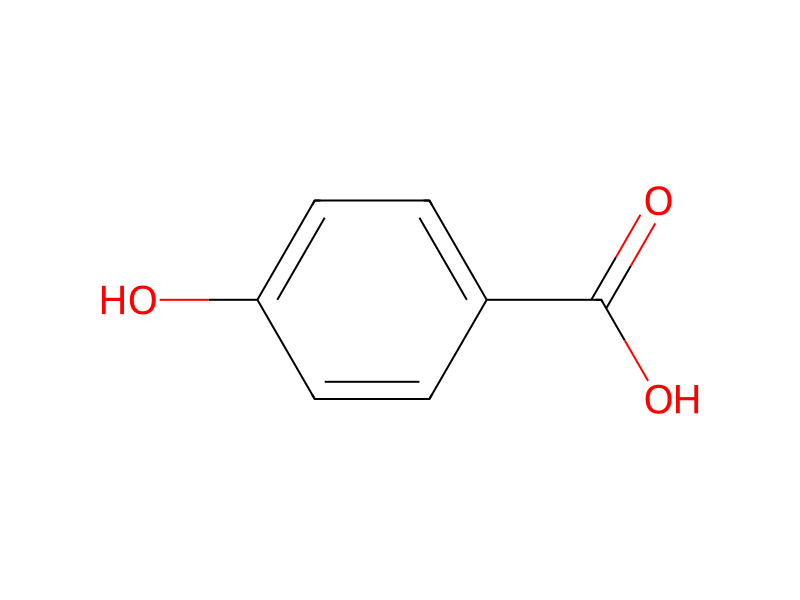
[C:1]([OH:4])(=[O:3])[CH3:2].[CH:5]1[C:10]([OH:11])=[CH:9][CH:8]=[C:7]([CH3:12])[CH:6]=1>C(O)(C)(C)C>[OH:11][C:10]1[CH:9]=[CH:8][C:7]([CH:12]=[O:3])=[CH:6][CH:5]=1.[OH:11][C:10]1[CH:5]=[CH:6][C:2]([C:1]([OH:4])=[O:3])=[CH:8][CH:9]=1Participants
5
Reactant 2


Product 2

Reagents, catalysts & solvents 1

Procedure
The catalyst (1 g) prepared in Example 3 was reacted according to the operating procedure of Example 2, except that the acetic acid was replaced by tert. butanol and the reaction temperature was 80° C. The p-cresol conversion was 50%. 2.2 mmole of p-hydroxybenzaldehyde and 0.2 mmole of p-hydroxybenzoic acid were obtained.
Workup
- customwas 80° C
Sources & evidence
- ORD record
- ord-a4f30bdb21ec433fa93261e88deaedb7
- Source dataset
- uspto-grants-1994_10
- Patent number
- US05354919
Reaction notes
Loading…