p-Anisoyl chloride → HCID 53674212, compound
Reaction equation

C([Li])CCC.[CH2:6]([O:10][CH:11]1[NH:15][C:14](=[O:16])[CH2:13][CH2:12]1)[CH2:7][CH2:8]C.[C:17](Cl)(=[O:26])[C:18]1[CH:23]=[CH:22][C:21]([O:24][CH3:25])=[CH:20][CH:19]=1>CCCCCC.O1CCCC1>[CH3:25][O:24][C:21]1[CH:22]=[CH:23][C:18]([C:17]([N:15]2[CH:11]([O:10][CH2:6][CH2:7][CH3:8])[CH2:12][CH2:13][C:14]2=[O:16])=[O:26])=[CH:19][CH:20]=1Participants
6
Reactant 3
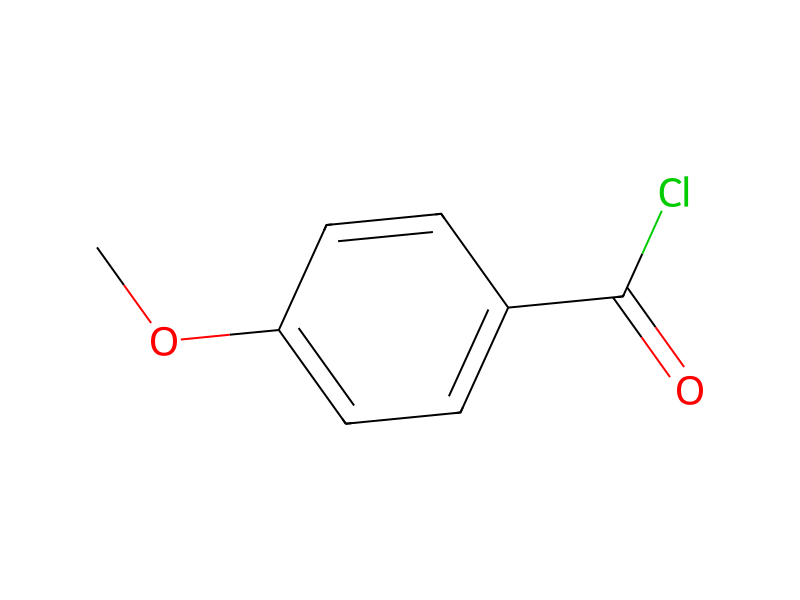


Product 1

Reagents, catalysts & solvents 2


Procedure
11.2 cm3 of a 1.6M solution of n-butyllithium in n-hexane is added at -40° C. to a solution, cooled to -45° C., of 2.8 g of 5-n-butyloxy pyrrolidin-2-one in 70 cm3 of tetrahydrofuran with agitation for 30 minutes. Under the same conditions, a solution of 5.24 g of anisoyl chloride (at 58% in toluene) in 6 cm3 of tetrahydrofuran is added. After agitation for 2 hours, allowing to return to ambient temperature, the mixture is evaporated to dryness. The oil obtained is chromato-graphed on silica (eluent: toluene-ethyl acetate 8-2) and 2 g of the product sought is obtained.
Workup
- customto return to ambient temperature
- customthe mixture is evaporated to dryness
- customThe oil obtained
- customsought is obtained
Sources & evidence
- ORD record
- ord-eea80835df834b3aba75ae0044836063
- Source dataset
- uspto-grants-1990_08
- Patent number
- US04948804
Reaction notes
Loading…