Hydrochloric Acid → HCID 14879909, compound
Reaction equation

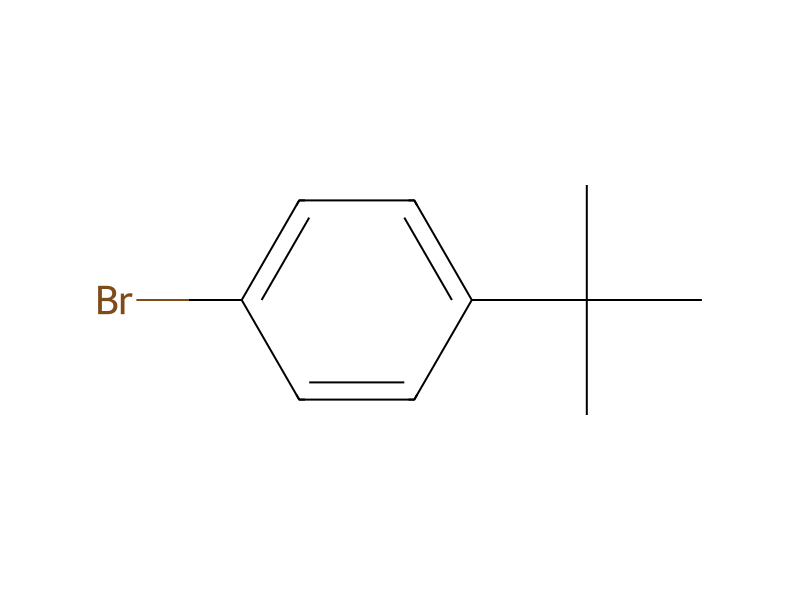
Br[C:2]1[CH:7]=[CH:6][C:5]([C:8]([CH3:11])([CH3:10])[CH3:9])=[CH:4][CH:3]=1.[Mg].II.[CH2:15]=[C:16]([CH2:19]Cl)[CH2:17][Cl:18].Cl>C(OCC)C>[C:8]([C:5]1[CH:6]=[CH:7][C:2]([CH2:19][C:16](=[CH2:15])[CH2:17][Cl:18])=[CH:3][CH:4]=1)([CH3:11])([CH3:10])[CH3:9]Participants






Procedure
A solution of p-bromo-(t-butyl)benzene (21.3 g., 0.10 mole) in dry diethyl ether (100 ml.) was added dropwise to a mixture of magnesium turnings (2.4 g.), a single iodine crystal and dry diethyl ether (50 ml.). The mixture was allowed to react at ambient temperature for two hours. The resultant Grignard solution was transferred to a dry dropping funnel and added dropwise to a solution of methallyl dichloride (13 8 g., 0.11 mole) in dry diethyl ether (50 ml.). After complete addition of the Grignard solution, the mixture was refluxed for three hours and thereafter cooled with an ice-water bath while 15% hydrochloric acid (150 ml.) was added thereto. The mixture was extracted with diethyl ether and the organic phase dried over sodium sulfate, filtered and evaporated to yield a liquid. The liquid was distilled to provide 10 grams of 2-[(p-t-butylphenyl)methyl]-2-propenyl chloride. This product was characterized by a boiling point of 105° C. to 111° C. at a pressure of 0.25 mm Hg.
Workup
- customto react at ambient temperature for two hours
- additionAfter complete addition of the Grignard solution
- temperaturethe mixture was refluxed for three hours
- additionwas added
- extractionThe mixture was extracted with diethyl ether
- dry with materialthe organic phase dried over sodium sulfate
- filtrationfiltered
- customevaporated
- customto yield a liquid
- distillationThe liquid was distilled
Sources & evidence
- ORD record
- ord-4e0a6e60deea4a358d4c40a7f4f4f6d3
- Source dataset
- uspto-grants-1990_08
- Patent number
- US04950671
Reaction notes
Loading…