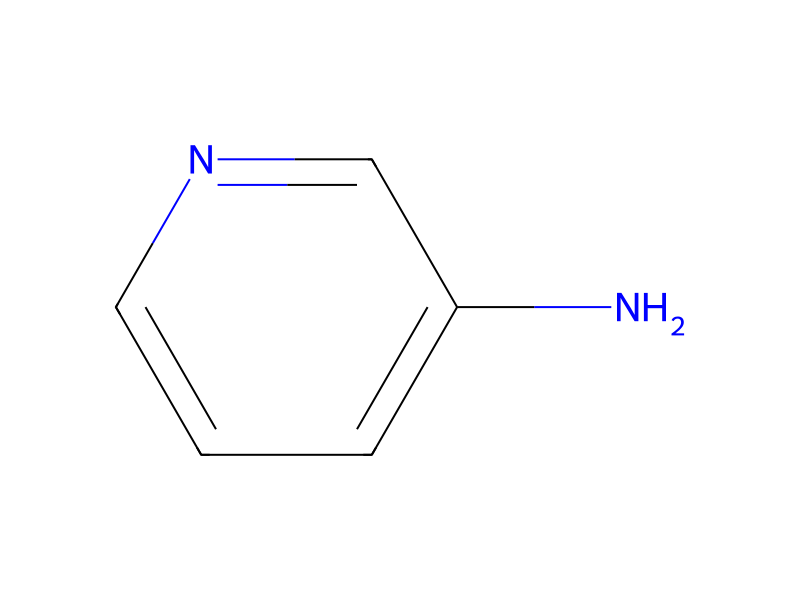
3-Aminopyridine → 3-Hydrazinylpyridine dihydrochloride
Reaction equation

[NH2:1][C:2]1[CH:3]=[N:4][CH:5]=[CH:6][CH:7]=1.[N:8]([O-])=O.[Na+].[Sn](Cl)[Cl:13]>Cl>[ClH:13].[ClH:13].[NH:1]([C:2]1[CH:3]=[N:4][CH:5]=[CH:6][CH:7]=1)[NH2:8]Participants
Reactant 3


Product 1

Reagents, catalysts & solvents 1

Conditions
- Temperature
- 0 °C
Procedure
3-Aminopyridine (20 g) was dissolved in concentrated hydrochloric acid (125 mL), and an a aqueous solution (40 mL) of sodium nitrite (15 g) was added at −10° C. over 20 min. The mixture was stirred at 0° C. for 2 hr. This solution was added to a solution (200 mL) of tin(II) chloride (80 g) in concentrated hydrochloric acid at −2° C. over 20 min. The mixture was stirred for 14 hr. The precipitate was filtered off and ice was added. The mixture was made strongly-basic with a 50% a aqueous potassium hydroxide solution and extracted with dichloromethane. The extract solution was dried and concentrated under reduced pressure. The residue was dissolved in ethyl acetate (400 mL) and 4 mol/L of hydrochloric acid-ethyl acetate (55 mL) was added under ice-cooling. The precipitate was collected by filtration to give 3-hydrazinopyridine dihydrochloride (18 g) as a pale-yellow solid.
Workup
- stirringThe mixture was stirred for 14 hr
- filtrationThe precipitate was filtered off
- additionice was added
- extractionextracted with dichloromethane
- customThe extract solution was dried
- concentrationconcentrated under reduced pressure
- dissolutionThe residue was dissolved in ethyl acetate (400 mL)
- addition4 mol/L of hydrochloric acid-ethyl acetate (55 mL) was added under ice-
- temperaturecooling
- filtrationThe precipitate was collected by filtration
Sources & evidence
- ORD record
- ord-ab56a896f7034027b000ddfad58355df
- Source dataset
- uspto-grants-2010_09
- Patent number
- US07790725B2
Reaction notes
Loading…