Sodium Chloride → 4-Hydrazinylpyridine dihydrochloride
Reaction equation

[ClH:1].[Cl:2][C:3]1[CH:8]=[CH:7][N:6]=[CH:5][CH:4]=1.O.[NH2:10][NH2:11].[Cl-].[Na+]>[OH-].[Na+]>[ClH:2].[ClH:1].[NH:10]([C:3]1[CH:8]=[CH:7][N:6]=[CH:5][CH:4]=1)[NH2:11]Participants
5
Reactant 3


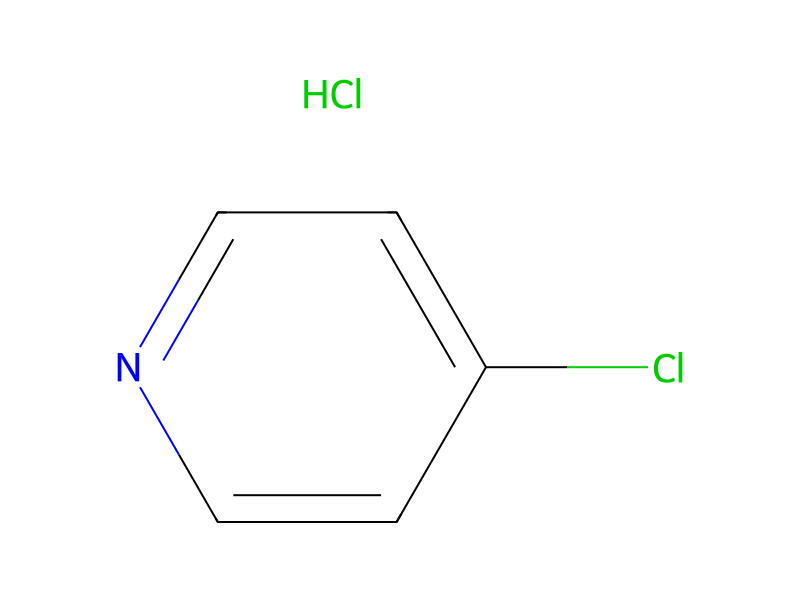
Product 1

Reagents, catalysts & solvents 1

Conditions
- Temperature
- 120 °C
Procedure
4-Chloropyridine hydrochloride (14 g) was added to hydrazine monohydrate (50 mL) and the mixture was stirred at 120° C. for 1 hr. A 1 mol/L a aqueous sodium hydroxide solution (100 mL) and sodium chloride were added to the reaction solution. The mixture was extracted with ethyl acetate and the extract solution was dried and concentrated under reduced pressure. The residue was dissolved in ethyl acetate (100 mL) and 4 mol/L hydrochloric acid-ethyl acetate (50 mL) was added under ice-cooling. The precipitate was collected by filtration to give 4-hydrazinopyridine dihydrochloride (16 g) as a pale-yellow solid.
Workup
- extractionThe mixture was extracted with ethyl acetate
- customthe extract solution was dried
- concentrationconcentrated under reduced pressure
- dissolutionThe residue was dissolved in ethyl acetate (100 mL)
- addition4 mol/L hydrochloric acid-ethyl acetate (50 mL) was added under ice-
- temperaturecooling
- filtrationThe precipitate was collected by filtration
Sources & evidence
- ORD record
- ord-fc31b835792442469be2e57c2892d74e
- Source dataset
- uspto-grants-2010_09
- Patent number
- US07790725B2
Reaction notes
Loading…