4-Methylmorpholine → HCID 86608958, compound
Reaction equation

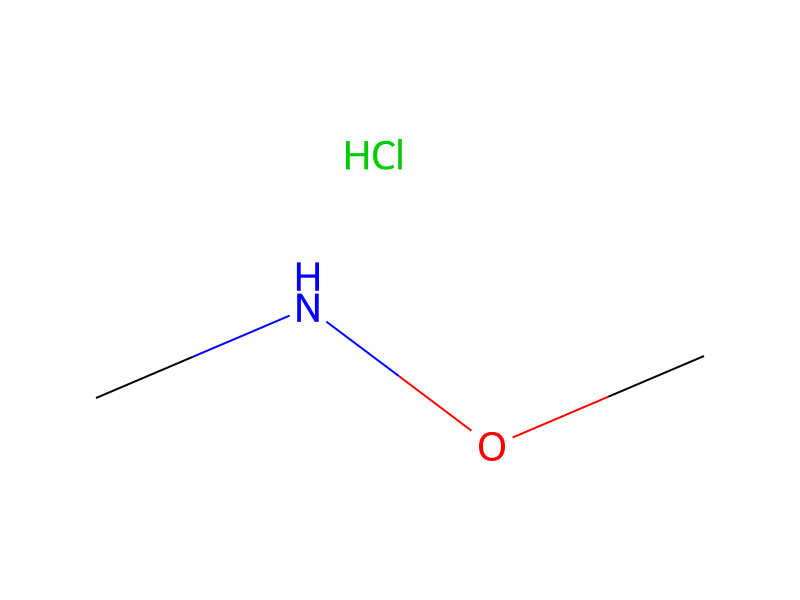
Cl.[CH3:2][NH:3][O:4][CH3:5].[NH2:6][C:7]1[C:15]([Cl:16])=[CH:14][CH:13]=[C:12]([Cl:17])[C:8]=1[C:9](O)=[O:10].CN1CCOCC1.CN(C(ON1N=NC2C=CC=CC1=2)=[N+](C)C)C.F[P-](F)(F)(F)(F)F>CN(C=O)C>[NH2:6][C:7]1[C:15]([Cl:16])=[CH:14][CH:13]=[C:12]([Cl:17])[C:8]=1[C:9]([N:3]([O:4][CH3:5])[CH3:2])=[O:10]Participants
Reactant 4



Product 1

Reagents, catalysts & solvents 1

Procedure
N,O-dimethlyhydroxylamine hydrochloride (3.28 g, 33 mmol) and 2-amino-3,6-dichlorobenzoic acid (4.76 g, 22 mmol) were dissolved in DMF (110 ml). At r.t. under nitrogen and stirring, first N-methyl morpholine (10 g, 99 mmol) and then HBTU (12.5 g, 33 mmol) were added, and the reaction was stirred at r.t. overnight. The reaction was poured onto water and extracted twice with ethyl acetate. The organic layer was dried over sodium sulfate, filtered, and the solvent was evaporated. The residue was treated with heptane and little diethyl ether to yield 4 g of the product. The mother liquor was purified by column chromatography (silica gel, solvent gradient n-heptan/ethyl acetate=3/7) to give another batch of the title compound as an off-white solid (5.52 g, 100%).
Workup
- stirringthe reaction was stirred at r.t. overnight
- additionThe reaction was poured onto water
- extractionextracted twice with ethyl acetate
- dry with materialThe organic layer was dried over sodium sulfate
- filtrationfiltered
- customthe solvent was evaporated
- additionThe residue was treated with heptane and little diethyl ether
Sources & evidence
- ORD record
- ord-dac7d6924e074f33a0c29e03ad40b47d
- Source dataset
- uspto-grants-2010_09
- Patent number
- US07790732B2
Reaction notes
Loading…