Hydrogen Peroxide → Methyl 2,4-dichloro-6-hydroxybenzoate
Reaction equation

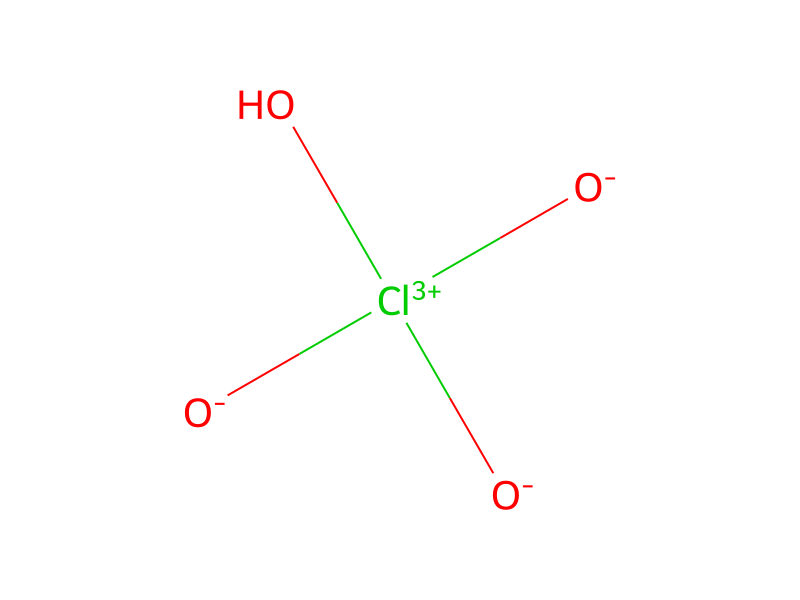
[Cl:1][C:2]1[CH:9]=[C:8]([Cl:10])[CH:7]=[C:6]([OH:11])[C:3]=1[CH:4]=[O:5].Cl(O)(=O)(=O)=O.OO.[CH3:19][OH:20]>[O-2].[V+5].[O-2].[O-2].[O-2].[O-2].[V+5]>[Cl:1][C:2]1[CH:9]=[C:8]([Cl:10])[CH:7]=[C:6]([OH:11])[C:3]=1[C:4]([O:20][CH3:19])=[O:5]Participants




Procedure
A solution of 2,4-dichloro-6-hydroxybenzaldehyde (5.00 g, 26.18 mmol) in 125 mL methanol was cooled to 0° C. Perchloric acid (70%, 1.47 mL, 16.23 mmol) was added, and the solution was stirred for 10 minutes. To a separate flask, vanadium (V) oxide (0.190 g, 1.05 mmol) was added to a hydrogen peroxide solution (30% in H2O, 11.90 mL, 104.7 mmol) at 0° C. This solution was stirred until the catalyst was dissolved, resulting in a clear orange solution, which was added dropwise to the methanol solution. The reaction was allowed to slowly warm to room temperature and stir overnight. The solution was concentrated under vacuum, and the residue dissolved in ethyl acetate. The organic extract was washed with aqueous sodium bicarbonate and brine, dried over Na2SO4, filtered and concentrated. The residue was filtered through a silica gel plug with 10% ethyl acetate in hexanes to provide methyl 2,4-dichloro-6-hydroxybenzoate that gave proton NMR spectra consistent with theory.
Workup
- stirringThis solution was stirred until the catalyst
- dissolutionwas dissolved
- customresulting in a clear orange solution, which
- stirringstir overnight
- concentrationThe solution was concentrated under vacuum
- dissolutionthe residue dissolved in ethyl acetate
- extractionThe organic extract
- washwas washed with aqueous sodium bicarbonate and brine
- dry with materialdried over Na2SO4
- filtrationfiltered
- concentrationconcentrated
- filtrationThe residue was filtered through a silica gel plug with 10% ethyl acetate in hexanes
Sources & evidence
- ORD record
- ord-9df57ae126ad481fbcd4cca1f572c36a
- Source dataset
- uspto-grants-2010_09
- Patent number
- US07790754B2
Reaction notes
Loading…