Pyridine → 2,5-Dibromo-3-nitropyridine
Reaction equation

O[C:2]1[C:7]([N+:8]([O-:10])=[O:9])=[CH:6][C:5]([Br:11])=[CH:4][N:3]=1.CN(C)C=O.P(Br)(Br)([Br:19])=O.N1C=CC=CC=1>C1(C)C=CC=CC=1.O>[Br:19][C:2]1[C:7]([N+:8]([O-:10])=[O:9])=[CH:6][C:5]([Br:11])=[CH:4][N:3]=1Participants
7
Reactant 4


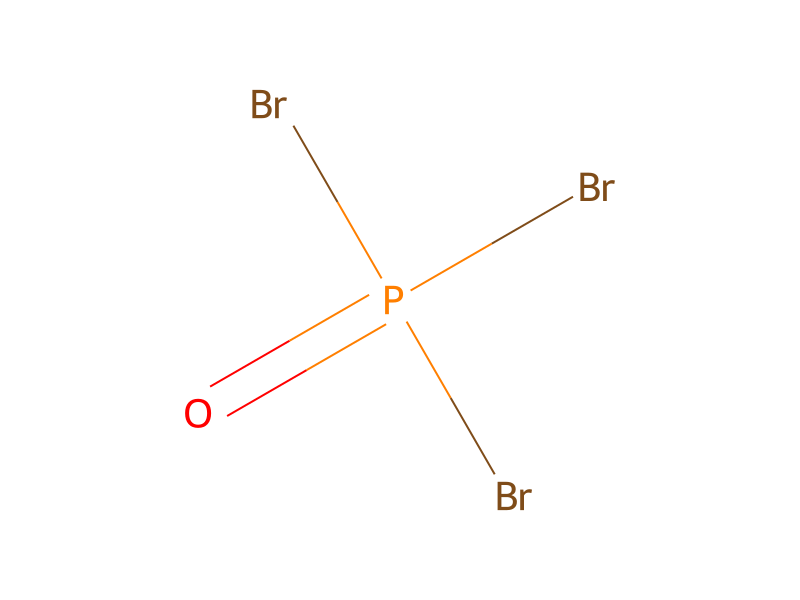

Product 1

Reagents, catalysts & solvents 2


Procedure
2-Hydroxy-3-nitro-5-bromopyridine (1 eq) was suspended in toluene (3 vol) and N,N-dimethylformamide (0.1 eq) was added. The mixture was protected from light. A solution of phosphorus oxybromide (1.2 eq) in toluene (2 vol) was added to the pyridine mixture over 1.5 h at about 90° C. and the reaction was aged for about 14 h at 90° C. The reaction mixture was cooled to room temperature and water (10 vol) and toluene (5 vol) were added. The layers were cut and the organic layer was washed with 1N NaOH (2×10 vol) and H2O (5 vol). The batch was concentrated under reduced pressure to yield the desired product.
Workup
- washthe organic layer was washed with 1N NaOH (2×10 vol) and H2O (5 vol)
- concentrationThe batch was concentrated under reduced pressure
Sources & evidence
- ORD record
- ord-bdca5da0618b4b77a3a81d48fa9c5562
- Source dataset
- uspto-grants-2010_09
- Patent number
- US07790754B2
Reaction notes
Loading…