Acrylonitrile → 3-(4-Methoxyphenoxy)propanenitrile
Reaction equation

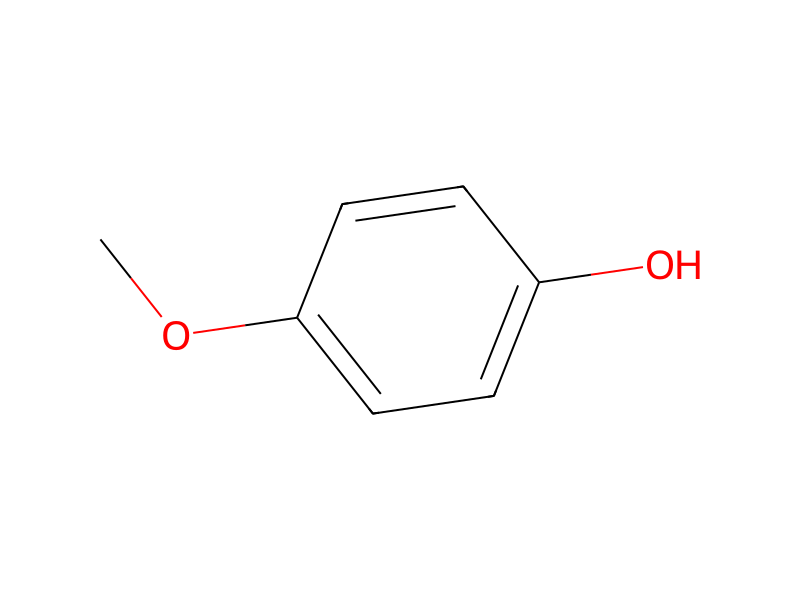
[CH3:1][O:2][C:3]1[CH:8]=[CH:7][C:6]([OH:9])=[CH:5][CH:4]=1.[C:10](#[N:13])[CH:11]=[CH2:12].C(N(CC)C(C)C)(C)C>C(N(CC)CC)C>[CH3:1][O:2][C:3]1[CH:8]=[CH:7][C:6]([O:9][CH2:12][CH2:11][C:10]#[N:13])=[CH:5][CH:4]=1Participants
Reactant 3


Product 1

Reagents, catalysts & solvents 1

Procedure
That is, 4-methoxyphenol (a) is reacted with acrylonitrile (b) in the presence of a base such as Triton B, triethylamine, N,N-diisopropylethylamine or the like, at 25 to 120° C. for 1 to 72 hours to obtain 3-(4-methoxyphenoxy)propionitrile (c), and the resultant is either reduced in a solvent such as tetrahydrofuran, dioxane or the like at 25 to 100° C. using a borane-tetrahydrofuran complex, a borane-dimethylsulfide complex, lithium aluminum hydride or the like, or reduced in a hydrogen atmosphere or in the presence of ammonia, using a catalyst such as Raney nickel or the like, thus to obtain 3-(4-methoxyphenoxy)propylamine (d). Subsequently, the resultant is reacted with 3-hydroxybenzaldehyde (e) in a solvent such as methanol, ethanol, isopropyl alcohol, tetrahydrofuran, toluene, acetonitrile or the like, and then the resultant is reduced using a reducing agent such as sodium borohydride, sodium triacetoxy borohydride or the like to obtain N-(3-(4-methoxyphenoxy)propyl)-3-hydroxybenzylamine (f). This is reacted with 2-chlorobenzoxazole (g) in a solvent such as dimethylformamide, acetonitrile, tetrahydrofuran, methylene chloride, chloroform, ethyl acetate or the like, in the presence of an inorganic base such as sodium carbonate, potassium carbonate, cesium carbonate or the like, or an organic base such as triethylamine, N,N-diisopropylethylamine, pyridine or the like, thus to obtain N-(benzoxazol-2-yl)-N-(3-(4-methoxyphenoxy)propyl)-3-hydrox ybenzylamine (compound (2)).
Sources & evidence
- ORD record
- ord-37345073893a42818127de6b0a21ebcc
- Source dataset
- uspto-grants-2010_09
- Patent number
- US07790903B2
Reaction notes
Loading…