Acrylic Acid → HCID 20786195, compound
Reaction equation

[C:1]([OH:5])(=O)[CH:2]=[CH2:3].CN1CCOCC1.ClC(OCC(C)C)=O.[C:21]([O:25][C:26](=[O:35])[NH:27][C:28]1[CH:33]=[CH:32][CH:31]=[CH:30][C:29]=1[NH2:34])([CH3:24])([CH3:23])[CH3:22]>ClCCl>[C:21]([O:25][C:26](=[O:35])[NH:27][C:28]1[CH:33]=[CH:32][CH:31]=[CH:30][C:29]=1[NH:34][C:1](=[O:5])[CH:2]=[CH2:3])([CH3:24])([CH3:22])[CH3:23]Participants



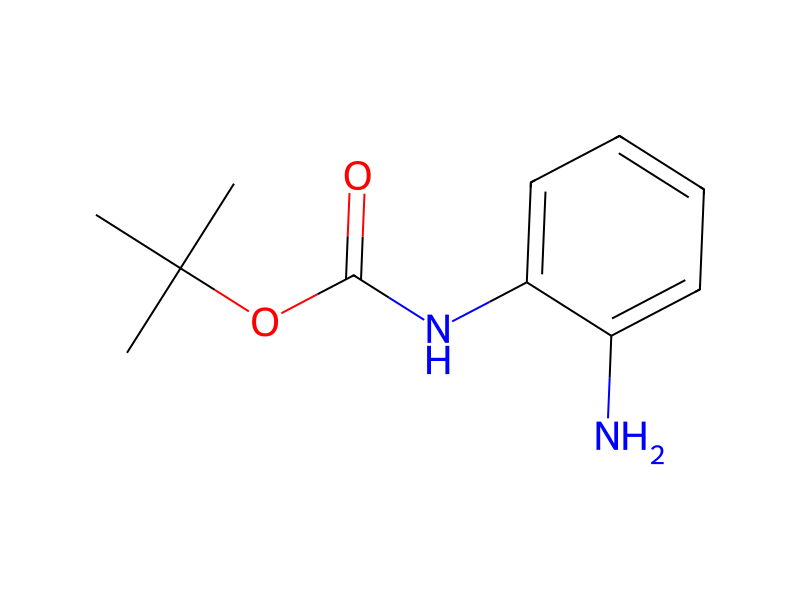


Procedure
To a solution of acrylic acid (2.50 g, 34.7 mmol) in dichloromethane (80 mL) at 0 degrees Celcius was added N-methyl-morpholine (4.73 g, 46.8 mmol), followed by isobutyl chloroformate (6.37 g, 46.8 mmol). After 30 minutes, a solution of (2-amino-phenyl)-carbamic acid tertbutyl ester (5.80 g, 27.8 mmol) in dichloromethane (50 mL) was added dropwise to the refluxing reaction mixture over 30 min. After the reaction was completed (2 hours later), the reaction mixture was allowed to cool down to room temperature, poured into ice water, and extracted with dichloromethane (30 mL×3). The organic layer was washed with water, dilute sodium bicarbonate solution, 0.1M HCl, water, and brine in turn. The organic layer was dried over sodium sulfate, filtered, and concentrated in vacuo. The crude solid was recrystallized from ethyl acetate/petroleum ether=1/4 (v/v) to obtain the desired product (2.5 g, 34%). MS: calc'd 263 (MH+), exp 263 (MH+).
Workup
- custom2 hours
- extractionextracted with dichloromethane (30 mL×3)
- washThe organic layer was washed with water, dilute sodium bicarbonate solution, 0.1M HCl, water, and brine in turn
- dry with materialThe organic layer was dried over sodium sulfate
- filtrationfiltered
- concentrationconcentrated in vacuo
- customThe crude solid was recrystallized from ethyl acetate/petroleum ether=1/4 (v/v)
Sources & evidence
- ORD record
- ord-2e4c7cedd3084aa9874bb4dce8cc04aa
- Source dataset
- uspto-grants-2010_09
- Patent number
- US07795315B2
Reaction notes
Loading…