Ethylene Glycol → 2-(4-Bromophenyl)-1,3-dioxolane
Reaction equation

[Br:1][C:2]1[CH:9]=[CH:8][C:5]([CH:6]=[O:7])=[CH:4][CH:3]=1.[CH2:10](O)[CH2:11][OH:12].O>C1(C)C=CC=CC=1.CC1C=CC(S(O)(=O)=O)=CC=1.O>[Br:1][C:2]1[CH:9]=[CH:8][C:5]([CH:6]2[O:12][CH2:11][CH2:10][O:7]2)=[CH:4][CH:3]=1Participants
6
Reactant 3


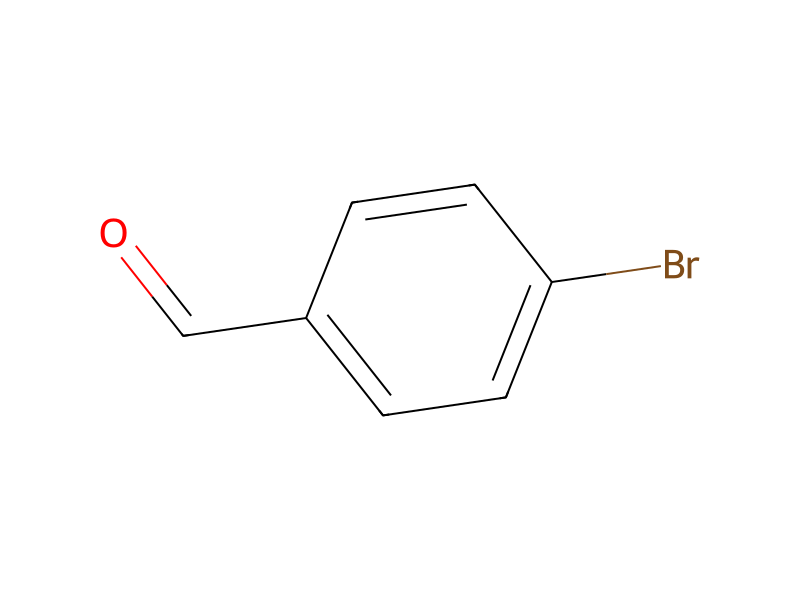
Product 1

Reagents, catalysts & solvents 2


Procedure
100 g (540 mmol) of 4-bromobenzaldehyde together with 200 mg of ptoluenesulfonic acid and 30 ml (540 mmol) of anhydrous ethylene glycol are initially introduced in 600 ml of toluene, and the mixture is refluxed on a water separator with monitoring by TLC. When the reaction is complete, the reaction solution is washed twice with sat. NaHCO3 solution and once with water, dried over Na2SO4 and evaporated in a rotary evaporator, giving 123 g (99% of theory) of the dioxolane as a yellow oil.
Workup
- washthe reaction solution is washed twice with sat. NaHCO3 solution and once with water
- dry with materialdried over Na2SO4
- customevaporated in a rotary evaporator
Sources & evidence
- ORD record
- ord-b8f0b9dd6dd64b69b5ef50c2eed2dda6
- Source dataset
- uspto-grants-2010_09
- Patent number
- US07799875B2
Reaction notes
Loading…