Ammonia → 6-Chloro-3-nitropyridin-2-ylamine
Reaction equation

[Cl:1][C:2]1[CH:7]=[CH:6][C:5]([N+:8]([O-:10])=[O:9])=[C:4](Cl)[N:3]=1.[NH3:12]>C(O)C>[NH2:12][C:4]1[N:3]=[C:2]([Cl:1])[CH:7]=[CH:6][C:5]=1[N+:8]([O-:10])=[O:9]Participants
Reactant 2

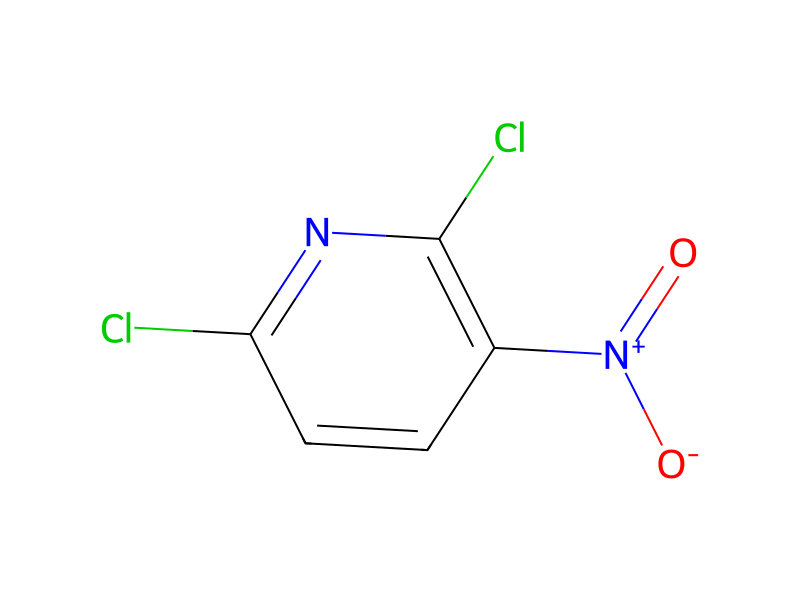
Product 1

Reagents, catalysts & solvents 1

Procedure
To a solution of commercially available 2,6-dichloro-5-nitropyridine (20.0 g, 95.3 mmol) in ethanol (300 mL) was added aqueous ammonia (60 mL), and the mixture was stirred at room temperature for 10 hours. The resulting precipitate was filtered, washed with ethanol, and dried in vacuo to give 6-amino-2-chloro-5-nitropyridine (13.8 g, 83%). The compound thus obtained was suspended in an acetic acid solution (130 mL) of 30% hydrogen bromide. The suspension was stirred at 100° C. for 26 hours, cooled to room temperature, and concentrated in vacuo. The resulting residue was extracted with ethyl acetate. The organic layer was washed with saturated aqueous sodium bicarbonate and saturated brine, dried over anhydrous magnesium sulfate, and concentrated in vacuo. The residue thus obtained was recrystallized from ethyl acetate to give the title compound (14.93 g, 86%).
Workup
- filtrationThe resulting precipitate was filtered
- washwashed with ethanol
- customdried in vacuo
Sources & evidence
- ORD record
- ord-22527c79fa304afcaef7b5ba4b527576
- Source dataset
- uspto-grants-2010_09
- Patent number
- US07803807B2
Reaction notes
Loading…