Ethanol → N-vinyl pyrrolidone vinyl chloroacetate
Reaction equation

[CH:1]([N:3]1[CH2:7][CH2:6][CH2:5][C:4]1=[O:8])=[CH2:2].[Cl:9][CH2:10][C:11]([O:13][CH:14]=[CH2:15])=[O:12].C(O)C.N(C(C)(C)C#N)=NC(C)(C)C#N>CC(C)=O>[CH:1]([N:3]1[CH2:7][CH2:6][CH2:5][C:4]1=[O:8])=[CH2:2].[Cl:9][CH2:10][C:11]([O:13][CH:14]=[CH2:15])=[O:12]Participants
6
Reactant 4


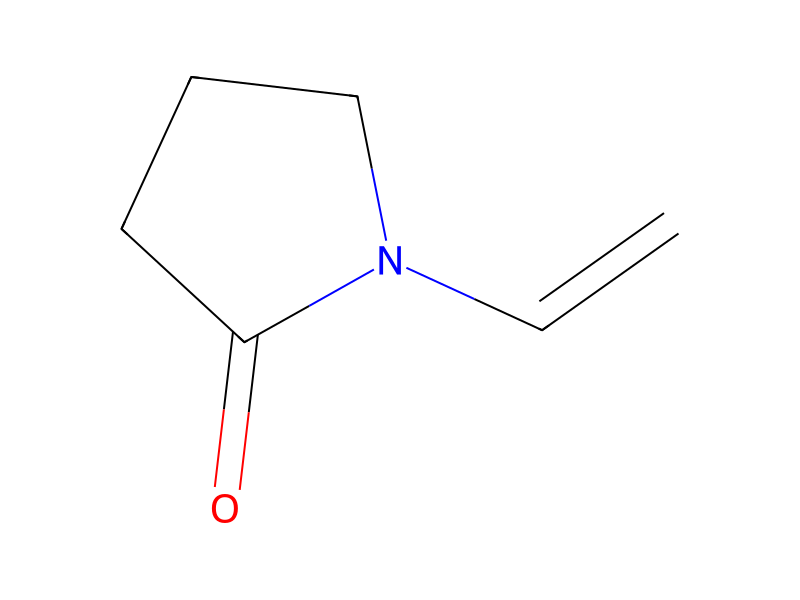

Product 1

Reagents, catalysts & solvents 1

Procedure
63.2 g of N-vinylpyrrolidone, 36.8 g of vinyl chloroacetate, 200 g of ethanol and 1 g of azobis-isobutyronitrile is placed in a reactor of 1000 ml capacity. The mixture is placed under a nitrogen blanket and is reflux-heated under constant stirring for 8 hours. The crude polymer solution is diluted in 200 g of acetone and precipitated in 5 l. of ethyl ether. After filtration and drying, a polymer is obtained which contains 37.5% of vinyl chloroacetate based on chlorine determination.
Workup
- temperatureis reflux-heated
- customprecipitated in 5 l
- filtrationAfter filtration
- customdrying
- customa polymer is obtained which
Sources & evidence
- ORD record
- ord-c3896181596948cdbf14abc62ff16055
- Source dataset
- uspto-grants-1989_08
- Patent number
- US04859460
Reaction notes
Loading…