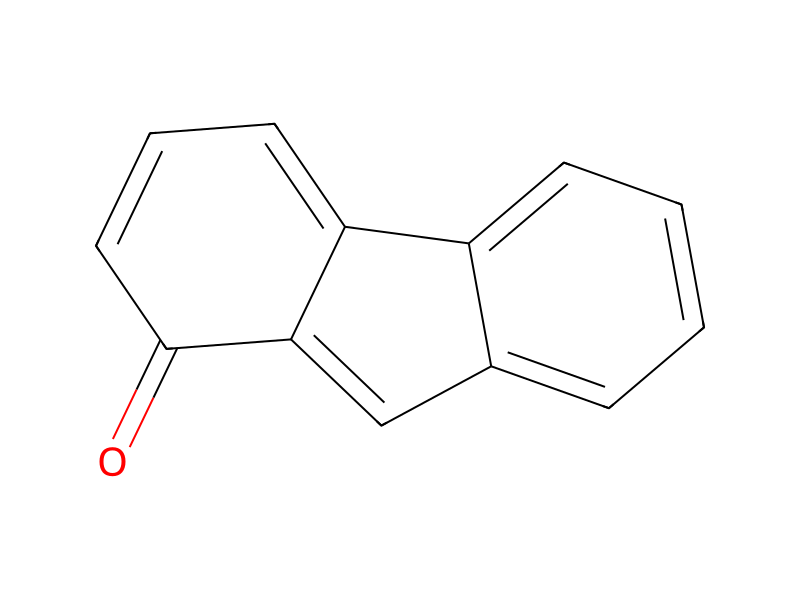
tert-Butyl hydroperoxide → Fluoreneone
Reaction equation

[CH:1]1[C:13]2[CH2:12][C:11]3[C:6](=[CH:7][CH:8]=[CH:9][CH:10]=3)[C:5]=2[CH:4]=[CH:3][CH:2]=1.CC([O:18]O)(C)C>>[C:1]1(=[O:18])[C:13]2[C:5]([C:6]3[C:11]([CH:12]=2)=[CH:10][CH:9]=[CH:8][CH:7]=3)=[CH:4][CH:3]=[CH:2]1Participants
Reactant 2


Product 1
Procedure
We initially studied oxidation of methylene substituted benzylic aromatics to ketones (Scheme 1, R≠H). When a mixture of fluorene with 10 equivalents 70% aqueous TBHP was irradiated with microwave in a sealed vessel for 10 minutes (250 W, 170° C.), an almost quantitative yield of fluorenone was isolated (Table 1). As a control experiment, when we simply refluxed the same reaction mixture by conventional oil bath heating for 8 hours, only a trace amount of fluorenone could be detected by TLC. Oxidation of another substrate with a doubly activated benzylic position, diphenylmethane, also afforded benzophenone in high yield. For the mono-activated methylene units, ethylbenzene to acetophenone and tetrahydronaphthalene to alpha-tetralone, the oxidations under this green protocol also went smoothly. The results are summarized in Table 1.
Workup
- customwas irradiated with microwave in a sealed vessel for 10 minutes (250 W, 170° C.)
Sources & evidence
- ORD record
- ord-589314e776cb4270a2053c42f8c212e7
- Source dataset
- uspto-grants-2009_02
- Patent number
- US07488843B1
Reaction notes
Loading…