Pyrrolidine → HCID 68614031, compound
Reaction equation

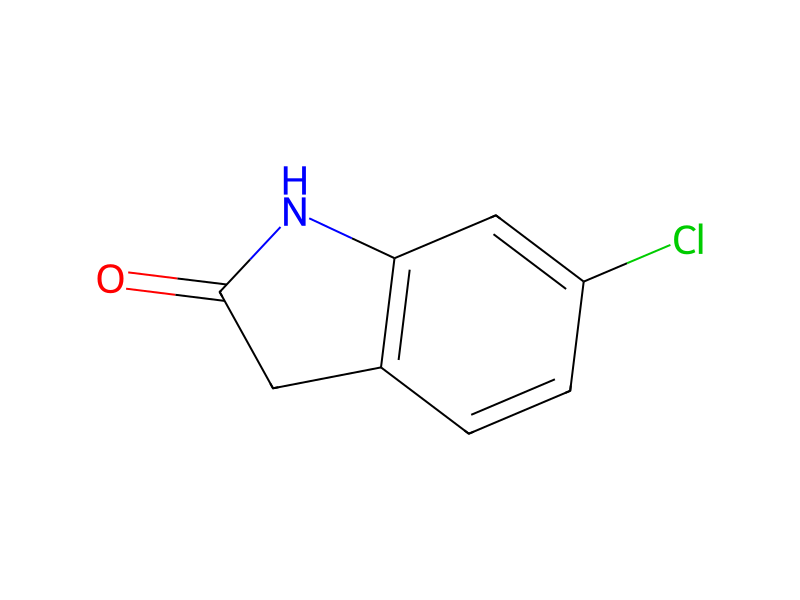
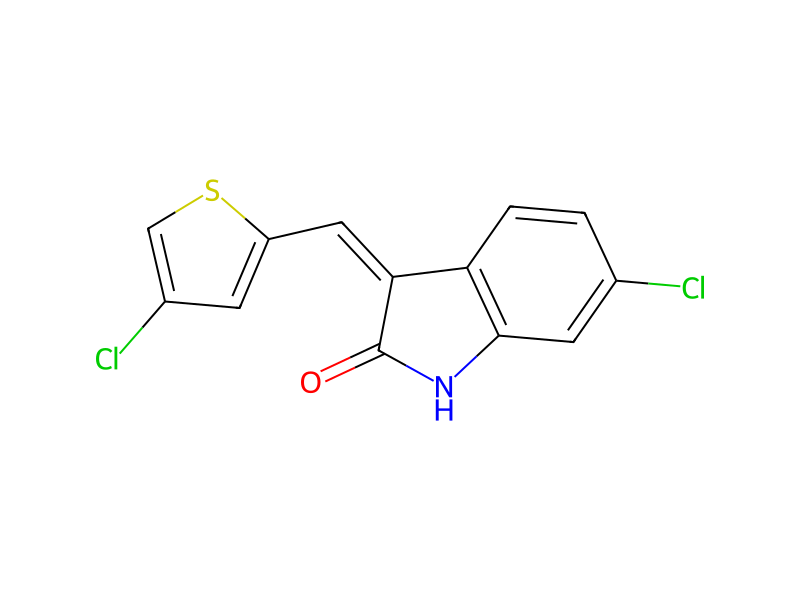
[Cl:1][C:2]1[CH:10]=[C:9]2[C:5]([CH2:6][C:7](=[O:11])[NH:8]2)=[CH:4][CH:3]=1.[Cl:12][C:13]1[CH:14]=[C:15]([CH:18]=O)[S:16][CH:17]=1.N1CCCC1>>[Cl:1][C:2]1[CH:10]=[C:9]2[C:5](/[C:6](=[CH:18]/[C:15]3[S:16][CH:17]=[C:13]([Cl:12])[CH:14]=3)/[C:7](=[O:11])[NH:8]2)=[CH:4][CH:3]=1Participants
4


Procedure
In a manner similar to the method described in example 1a, 6-chlorooxindole (1.2 g, 7.2 mmol) was reacted with 4-chloro-thiophene-2-carbaldehyde (1.05 g, 7.2 mmol) and pyrrolidine (0.7 g, 9.9 mmol) to give E/Z-6-chloro-3-(4-chloro-thiophen-2-ylmethylene)-1,3-dihydro-indol-2-one as a yellow solid (Yield 1.3 g, 62%)
Sources & evidence
- ORD record
- ord-e2f1338e73144c3f91d4f33a6a49c1d9
- Source dataset
- uspto-grants-2009_02
- Patent number
- US07495007B2
Reaction notes
Loading…