Isopropyl iodide → 5-chloro-2-isopropoxybenzaldehyde
Reaction equation

[Cl:1][C:2]1[CH:3]=[CH:4][C:5]([OH:10])=[C:6]([CH:9]=1)[CH:7]=[O:8].I[CH:12]([CH3:14])[CH3:13].C([O-])([O-])=O.[K+].[K+]>CN(C=O)C>[Cl:1][C:2]1[CH:3]=[CH:4][C:5]([O:10][CH:12]([CH3:14])[CH3:13])=[C:6]([CH:9]=1)[CH:7]=[O:8]Participants
5
Reactant 3


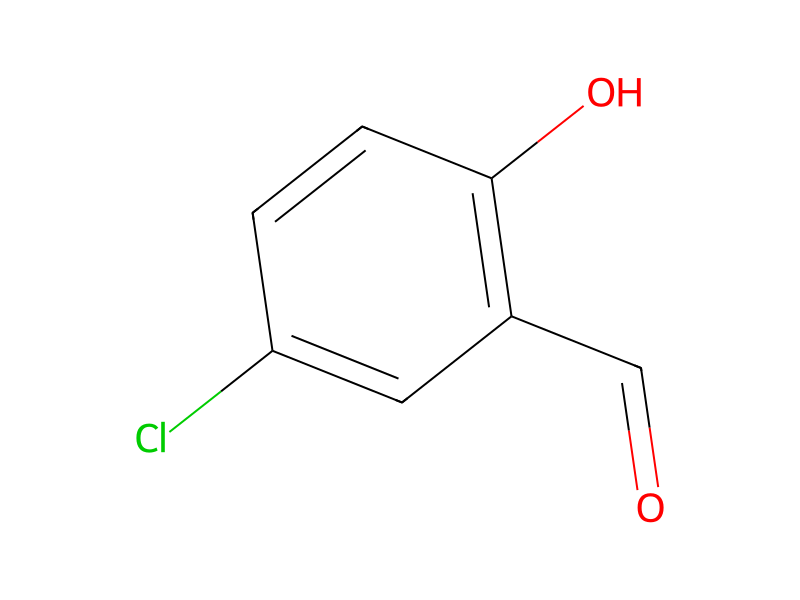
Product 1

Reagents, catalysts & solvents 1

Procedure
5-Chloro-2-hydroxy-benzaldehyde (3 g, 19.16 mmol),2-Iodo-propane (4.88 g, 28.74 mmol) and K2CO3 (4 g, 28.74 mmol) was mixed in anhydrous DMF. The reaction tube was placed into the cavity of a focused monomode microwave reactor and the contents of the flask were irradiated for 30 min at 100° C. Then the solution was filtered and the filtration was concentrated to obtain the crude product (3 g). The crude product was used into next step reaction without further purification.
Workup
- customThe reaction tube was placed into the cavity of a focused monomode microwave reactor
- customthe contents of the flask were irradiated for 30 min at 100° C
- filtrationThen the solution was filtered
- filtrationthe filtration
- concentrationwas concentrated
Sources & evidence
- ORD record
- ord-831fe5f47a49478886682d089bd99e2a
- Source dataset
- uspto-grants-2009_02
- Patent number
- US07495007B2
Reaction notes
Loading…