Pyrrolidine → HCID 86760820, compound
Reaction equation

[Cl:1][C:2]1[CH:14]=[CH:13][C:5]([O:6][CH2:7][CH2:8][O:9]C(=O)C)=[C:4]([CH:15]=O)[CH:3]=1.[Cl:17][C:18]1[CH:26]=[C:25]2[C:21]([CH2:22][C:23](=[O:27])[NH:24]2)=[CH:20][CH:19]=1.N1CCCC1>CO>[Cl:17][C:18]1[CH:26]=[C:25]2[C:21](/[C:22](=[CH:15]/[C:4]3[CH:3]=[C:2]([Cl:1])[CH:14]=[CH:13][C:5]=3[O:6][CH2:7][CH2:8][OH:9])/[C:23](=[O:27])[NH:24]2)=[CH:20][CH:19]=1Participants
5
Reactant 3

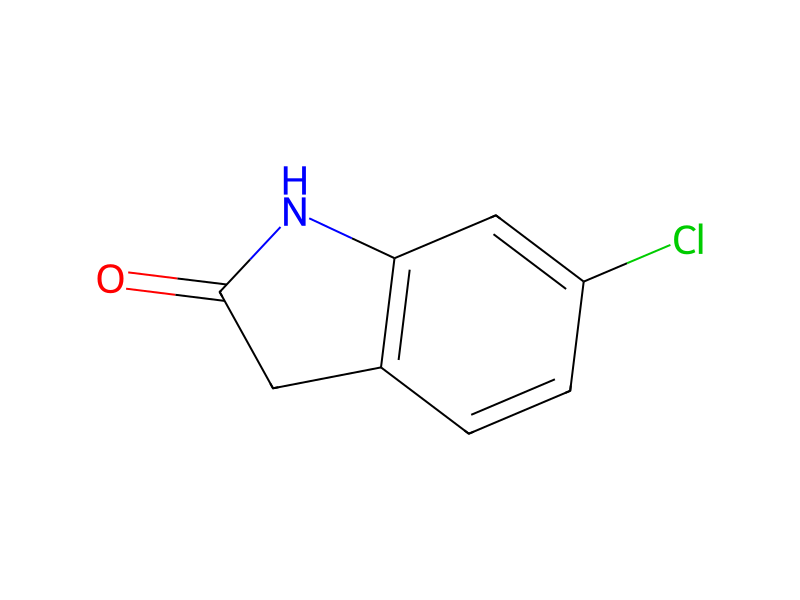

Product 1

Reagents, catalysts & solvents 1

Conditions
- Temperature
- 70 °C
Procedure
Acetic acid 2-(4-chloro-2-formyl-phenoxy)-ethyl ester (1.5 g, 9.3 mmol) and 6-chlorooxindole (2.7 g, 11.2 mmol) were mixed in anhydrous methanol (20 mL) at room temperature. Then Pyrrolidine (0.8 g, 11.2 mmol) was added slowly. The reaction mixture was heated at 70° C. for 3 h, then cooled to r.t and the precipitation was collected by filtration to obtain title compound as a yellow solid (1.4 g).
Workup
- temperaturecooled
- customthe precipitation
- filtrationwas collected by filtration
Sources & evidence
- ORD record
- ord-fa32caf35f1745f185357647852a8e0c
- Source dataset
- uspto-grants-2009_02
- Patent number
- US07495007B2
Reaction notes
Loading…