Potassium Carbonate → HCID 819983, compound
Reaction equation

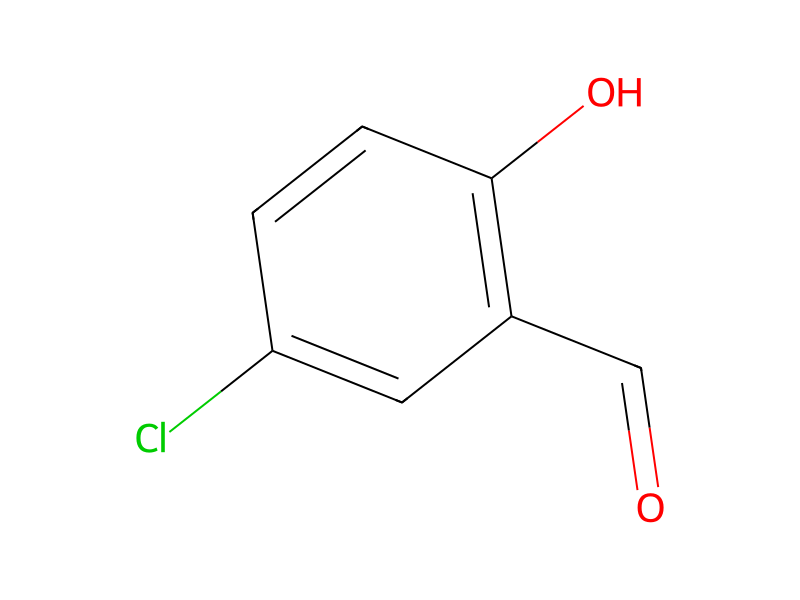
[Cl:1][C:2]1[CH:3]=[CH:4][C:5]([OH:10])=[C:6]([CH:9]=1)[CH:7]=[O:8].[CH3:11][O:12][C:13](=[O:16])[CH2:14]Br.C([O-])([O-])=O.[K+].[K+]>CC(C)=O>[CH3:11][O:12][C:13](=[O:16])[CH2:14][O:10][C:5]1[CH:4]=[CH:3][C:2]([Cl:1])=[CH:9][C:6]=1[CH:7]=[O:8]Participants
5
Reactant 3


Product 1

Reagents, catalysts & solvents 1

Conditions
- Temperature
- 80 °C
Procedure
5-Chloro-2-hydroxy-benzaldehyde (30 g, 192 mmol), bromo-acetic acid methyl ester (29.4 g, 192 mmol), K2CO3 (53 g, 384 mmol) and KI (9.6 g, 57 mmol) were mixed in acetone (100 mL). Then the mixture was heated at 80° C. for 30 min. The mixture was filtered and the filterate was concentrated. The residue was dissolve in ethyl acetate and washed with base aqueous solution (1N NaOH). The organic layer was separated, dried and concentrated to give (4-chloro-2-formyl-phenoxy)-acetic acid methyl ester yellow solid. (44 g)
Workup
- filtrationThe mixture was filtered
- concentrationthe filterate was concentrated
- dissolutionThe residue was dissolve in ethyl acetate
- washwashed with base aqueous solution (1N NaOH)
- customThe organic layer was separated
- customdried
- concentrationconcentrated
Sources & evidence
- ORD record
- ord-77764982c8ca4be082f99248ec119dee
- Source dataset
- uspto-grants-2009_02
- Patent number
- US07495007B2
Reaction notes
Loading…