Pyrrolidine → HCID 68960388, compound
Reaction equation

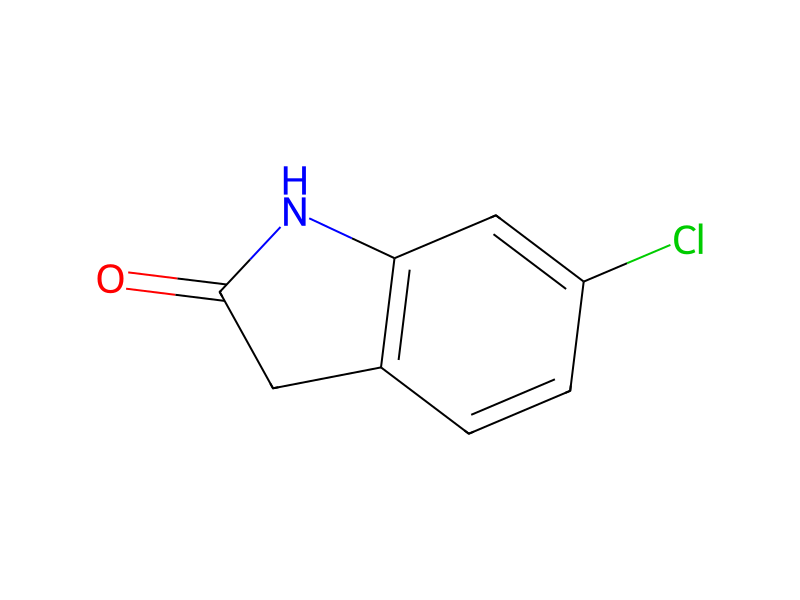
[Cl:1][C:2]1[CH:3]=[CH:4][C:5]([O:10][CH2:11][C:12]([F:15])([F:14])[F:13])=[C:6]([CH:9]=1)[CH:7]=O.[Cl:16][C:17]1[CH:25]=[C:24]2[C:20]([CH2:21][C:22](=[O:26])[NH:23]2)=[CH:19][CH:18]=1.N1CCCC1>CO>[Cl:16][C:17]1[CH:25]=[C:24]2[C:20]([C:21](=[CH:7][C:6]3[CH:9]=[C:2]([Cl:1])[CH:3]=[CH:4][C:5]=3[O:10][CH2:11][C:12]([F:15])([F:14])[F:13])[C:22](=[O:26])[NH:23]2)=[CH:19][CH:18]=1Participants
5
Reactant 3


Product 1

Reagents, catalysts & solvents 1

Conditions
- Temperature
- 70 °C
Procedure
5-Chloro-2-(2,2,2-trifluoro-ethoxy)-benzaldehyde (4 g, 16 mmol) and 6-chlorooxindole (2.8 g, 16 mmol) were mixed in anhydrous methanol (20 mL). Then pyrrolidine (1.32 mL, 16 mmol) was added slowly at r.t. The mixture was heated to 70° C. for 3 h and cooled to room temperature. The precipitate was collected by filtration to give title compound as a yellow solid (Yield: 4.45 g, 72%).
Workup
- temperaturecooled to room temperature
- filtrationThe precipitate was collected by filtration
Sources & evidence
- ORD record
- ord-ffc311f32b0c417d8a6fb93816b50742
- Source dataset
- uspto-grants-2009_02
- Patent number
- US07495007B2
Reaction notes
Loading…