Pyrrolidine → Z-3-[4-Chloro-2-(6-chloro-2-oxo-1,2-dihydro-indol-3-ylidenemethyl)-phenoxy]-2,2-dimethyl-propionic acid methyl ester
Reaction equation

[CH3:1][O:2][C:3](=[O:18])[C:4]([CH3:17])([CH3:16])[CH2:5][O:6][C:7]1[CH:12]=[CH:11][C:10]([Cl:13])=[CH:9][C:8]=1[CH:14]=O.[Cl:19][C:20]1[CH:28]=[C:27]2[C:23]([CH2:24][C:25](=[O:29])[NH:26]2)=[CH:22][CH:21]=1.N1CCCC1>CO>[CH3:1][O:2][C:3](=[O:18])[C:4]([CH3:17])([CH3:16])[CH2:5][O:6][C:7]1[CH:12]=[CH:11][C:10]([Cl:13])=[CH:9][C:8]=1/[CH:14]=[C:24]1\[C:25](=[O:29])[NH:26][C:27]2[C:23]\1=[CH:22][CH:21]=[C:20]([Cl:19])[CH:28]=2Participants
5
Reactant 3

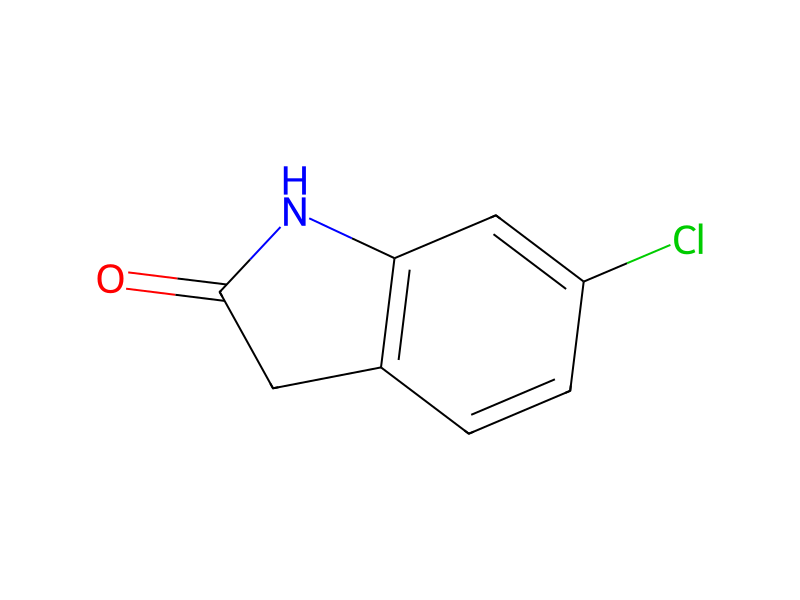

Product 1

Reagents, catalysts & solvents 1

Conditions
- Temperature
- 70 °C
Procedure
3-(4-Chloro-2-formyl-phenoxy)-2,2-dimethyl-propionic acid methyl ester (6.7 g, 25 mmol) and 6-Chlorooxindole (4.35 g, 25 mmol) were mixed in anhydrous methanol (20 mL). Then pyrrolidine (2 mL, 25 mmol) was added slowly at r.t. The mixture was heated at 70° C. for 3 h and cooled to room temperature. The precipitate was collected by filtration to give title compound as a yellow solid (Yield: 7 g, 67%).
Workup
- temperaturecooled to room temperature
- filtrationThe precipitate was collected by filtration
Sources & evidence
- ORD record
- ord-59b0ef42a3064cf09d0bf86210ebaee3
- Source dataset
- uspto-grants-2009_02
- Patent number
- US07495007B2
Reaction notes
Loading…