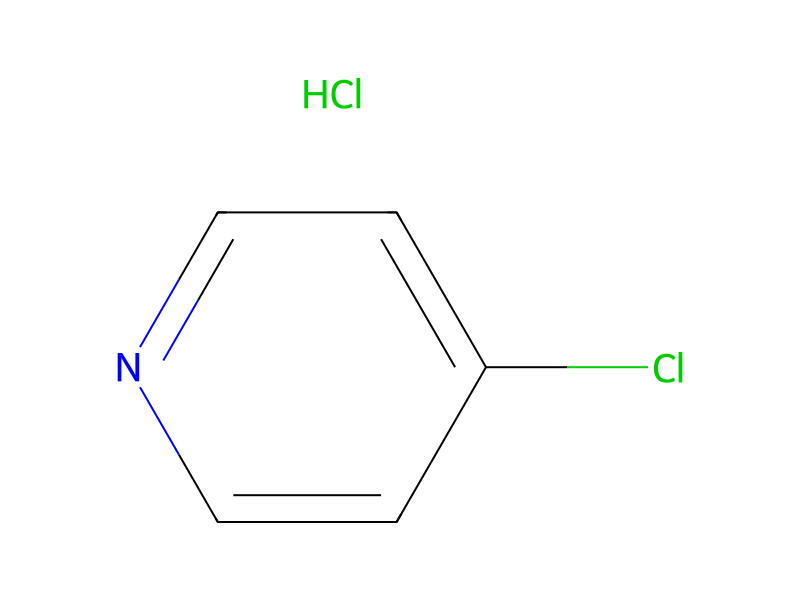
4-Chloropyridine hydrochloride → 3-(4-Pyridinylamino)-1H-indole-2-carboxylic acid ethyl ester
Reaction equation

[NH2:1][C:2]1[C:10]2[C:5](=[CH:6][CH:7]=[CH:8][CH:9]=2)[NH:4][C:3]=1[C:11]([O:13][CH2:14][CH3:15])=[O:12].Cl.Cl[C:18]1[CH:23]=[CH:22][N:21]=[CH:20][CH:19]=1>CN1CCCC1=O>[N:21]1[CH:22]=[CH:23][C:18]([NH:1][C:2]2[C:10]3[C:5](=[CH:6][CH:7]=[CH:8][CH:9]=3)[NH:4][C:3]=2[C:11]([O:13][CH2:14][CH3:15])=[O:12])=[CH:19][CH:20]=1Participants
4



Procedure
A solution ethyl 3-aminoindole-2-carboxylate (4.94 g, 24.2 mmole) and 4-chloropyridine hydrochloride (3.63 g, 24.2 mmole) in 70 mL of 1-methyl-2-pyrrolidinone was heated at 165° C. for 6 hours. The reaction mixture was then quenched into water and the aqueous phase was washed with ethyl acetate. After basification with a potassium carbonate solution, a solid was filtered, rinsed with water and ether and dried to give 4.13 g of a brown solid. A 2.2 g portion was recrystallized from methanol (charcoal treatment) to give 1.40 g of an off-white solid, mp: 248°-250° C. (dec.)
Workup
- customThe reaction mixture was then quenched into water
- washthe aqueous phase was washed with ethyl acetate
- filtrationAfter basification with a potassium carbonate solution, a solid was filtered
- washrinsed with water and ether
- customdried
Sources & evidence
- ORD record
- ord-29c07b7f09324a3dab40fba91cf5713d
- Source dataset
- uspto-grants-1994_07
- Patent number
- US05328920
Reaction notes
Loading…