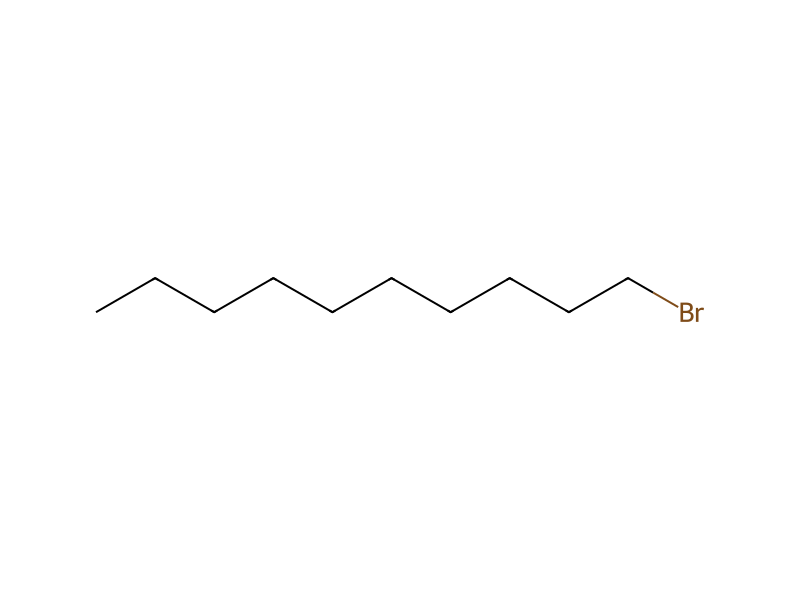
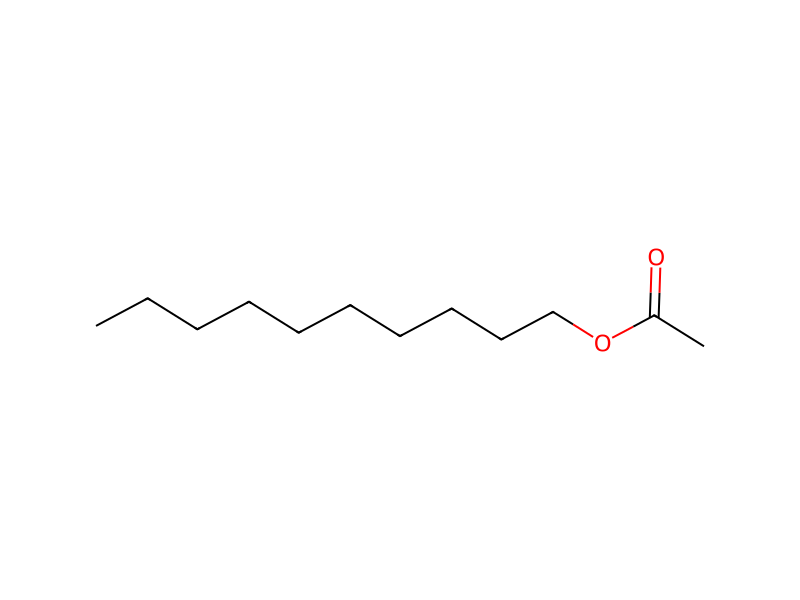
1-Bromodecane → Decyl acetate
Reaction equation

Br[CH2:2][CH2:3][CH2:4][CH2:5][CH2:6][CH2:7][CH2:8][CH2:9][CH2:10][CH3:11].O.O.O.[C:15]([O-:18])(=[O:17])[CH3:16].[Na+].C=CCCCCCCCC.[Cl-].C(C([NH3+])(C(=O)CCCCCCC)C(=O)CCCCCCC)(=O)CCCCCCC>>[C:15]([O:18][CH2:2][CH2:3][CH2:4][CH2:5][CH2:6][CH2:7][CH2:8][CH2:9][CH2:10][CH3:11])(=[O:17])[CH3:16]Participants
5


Conditions
- Temperature
- 105 °C
Procedure
A reaction mixture containing 55 grams of 1-bromodecane (0.25 mole), 270 grams of sodium acetate trihydrate (1.98 moles) 12.5 ml of 1-decene and 10grams of tricaprylylmethylammonium chloride was heated to 105° C for2 hours with mechanical stirring. The progress of the reaction was followedby periodic sampling and gas liquid partition chromatography analysis of the organic layer. The reaction forming decyl acetate was essentially complete after 1 hour. A plot of the data showed reasonably good first-order kinetics.
Workup
- aliquotfollowedby periodic sampling
- customgas liquid partition chromatography analysis of the organic layer
Sources & evidence
- ORD record
- ord-56651604649d4ab28d78dfd6e14c4c57
- Source dataset
- uspto-grants-1976_11
- Patent number
- US03992432
Reaction notes
Loading…