DL-cysteine → HCID 13131476, compound
Reaction equation

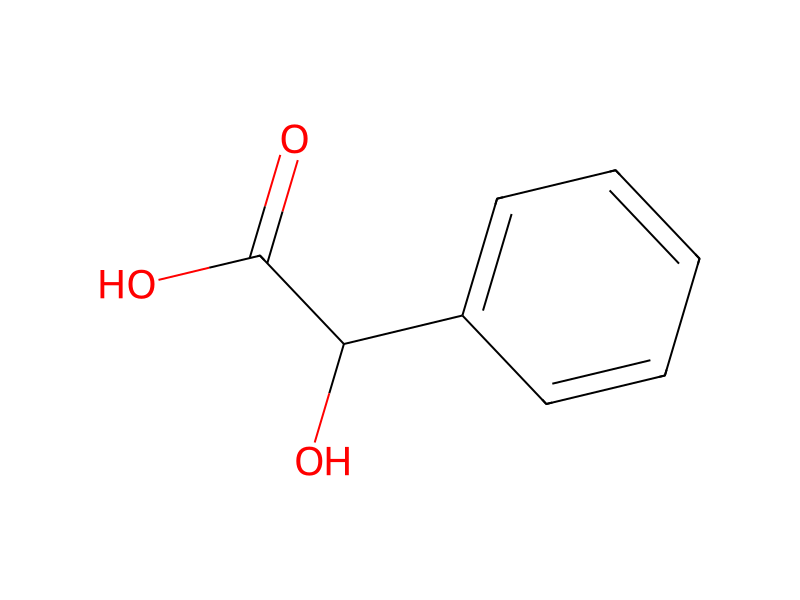
[NH2:1][CH:2]([C:5]([OH:7])=[O:6])[CH2:3][SH:4].[NH2:8][C@H:9]([C:12]([OH:14])=[O:13])[CH2:10][SH:11].[C:15]([OH:25])(=[O:24])[CH:16]([C:18]1[CH:23]=[CH:22][CH:21]=[CH:20][CH:19]=1)[OH:17]>>[C:15]([OH:25])(=[O:24])[C@H:16]([C:18]1[CH:23]=[CH:22][CH:21]=[CH:20][CH:19]=1)[OH:17].[NH2:1][C@H:2]([C:5]([OH:7])=[O:6])[CH2:3][SH:4].[C:15]([OH:25])(=[O:24])[C@@H:16]([C:18]1[CH:23]=[CH:22][CH:21]=[CH:20][CH:19]=1)[OH:17].[NH2:8][C@@H:9]([C:12]([OH:14])=[O:13])[CH2:10][SH:11]Participants
5



Procedure
The first step of carrying out the present method is to dissolve free DL-cysteine or cysteine containing excess amount of one of the enantiomers thereof in a liquid medium. Also, optically active mandelic acid is dissolved in the same kind of liquid medium. The latter solution (mandelic acid solution) is gradually added to the former solution (cysteine solution). Then, the less soluble complex will preferentially precipitates or crystallizes out in the mixed solution. Separation of the solid from the liquid gives L-cysteine L-mandelic acid or D-cysteine D-mandelic acid.
Workup
- customThen, the less soluble complex will preferentially precipitates
- customcrystallizes out in the mixed solution
- customSeparation of the solid from the liquid
Sources & evidence
- ORD record
- ord-7667111caad74c2aaa3acf132fd66e32
- Source dataset
- uspto-grants-1986_11
- Patent number
- US04621151
Reaction notes
Loading…