Benzene → Phenylacetaldehyde dimethyl acetal
Reaction equation

[CH:1]1[CH:6]=[CH:5][CH:4]=[CH:3][CH:2]=1.[CH2:7]1[O:15][CH:8]1[C:9]1C=CC=CC=1.C1(C[CH:23]=[O:24])C=CC=CC=1.C(=O)([O-])[O-].[Na+].[Na+]>CO>[CH3:7][O:15][CH:8]([O:24][CH3:23])[CH2:9][C:1]1[CH:6]=[CH:5][CH:4]=[CH:3][CH:2]=1Participants
Reactant 4

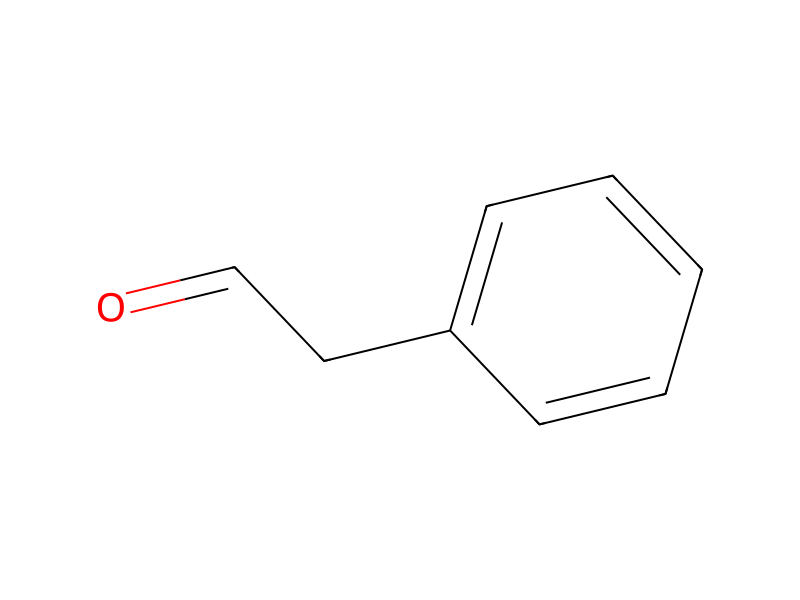


Product 1

Reagents, catalysts & solvents 1

Conditions
- Temperature
- 50 °C
Procedure
To a benzene (25 ml) solution of styrene oxide (1.20 g, 10 mmol), allyl(1,5-cyclooctadiene)palladium trifluoromethanesulfonate (41 mg, 0.10 mmol) was added as a catalyst, and the mixture was stirred at 50° C. for 10 minutes. The reaction solution was analyzed by an internal standard method by means of gas chromatography and the nuclear magnetic resonance spectrum, whereby it was found that the yield of phenylacetaldehyde was 75%. Then, to this reaction solution, methanol (10 ml) was added, and the mixture was stirred at 50° C. for 30 minutes. To the reaction mixture, a 2% sodium carbonate aqueous solution (20 ml) was added, and the organic layer and the aqueous layer were separated. The organic layer was analyzed by gas chromatography and the nuclear magnetic resonance spectrum, whereby it was found that phenylacetaldehyde disappeared completely and phenylacetaldehyde dimethylacetal formed substantially quantitatively relative to the aldehyde contained in the crude reaction mixture. The phenylacetaldehyde dimethylacetal fraction obtained by the gas chromatography, was subjected to the measurement of the nuclear magnetic resonance spectrum to determine the structure.
Workup
- stirringthe mixture was stirred at 50° C. for 30 minutes
- customthe organic layer and the aqueous layer were separated
Sources & evidence
- ORD record
- ord-51257e64b2024748823bb2a5874e9dae
- Source dataset
- uspto-grants-1986_11
- Patent number
- US04621150
Reaction notes
Loading…