2,5-Dichlorobenzoic acid → HCID 20298962, compound
Reaction equation

Cl[C:2]1[CH:10]=[CH:9][C:8]([Cl:11])=[CH:7][C:3]=1[C:4]([OH:6])=[O:5].[F:12][C:13]([F:22])([F:21])[C:14]1[CH:15]=[C:16]([OH:20])[CH:17]=[CH:18][CH:19]=1.[H-].[Na+]>C1(C)C(C)=CC=CC=1>[Cl:11][C:8]1[CH:7]=[C:3]([C:2]([O:20][C:16]2[CH:17]=[CH:18][CH:19]=[C:14]([C:13]([F:12])([F:21])[F:22])[CH:15]=2)=[CH:10][CH:9]=1)[C:4]([OH:6])=[O:5]Participants
5
Reactant 3

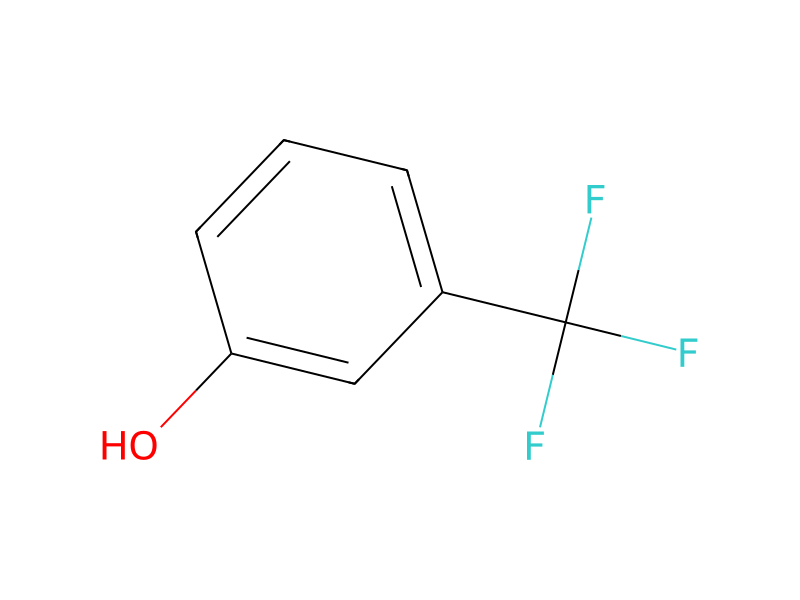

Product 1

Reagents, catalysts & solvents 1

Procedure
2,5-Dichlorobenzoic acid (5 g) and 3-trifluoromethylphenol (4.24 g) were dissolved in xylene and the solution placed under dry oxygen-free nitrogen. Sodium hydride (1.25 g) was slowly added and when effervescence had ceased, cuprous bromide was added and the solution or suspension refluxed for 6 hours. The xylene was removed by low pressure distillation. The solid residue was treated with water and acidified with dilute hydrochloric acid. The resulting oil was extracted into diethyl ether and the ether removed by low pressure distillation to give a light yellow solid which was recrystallised from diethyl ether/petroleum ether to give the title compound (2.7 g), mp, 124° C.
Workup
- temperaturethe solution or suspension refluxed for 6 hours
- customThe xylene was removed by low pressure distillation
- additionThe solid residue was treated with water
- extractionThe resulting oil was extracted into diethyl ether
- customthe ether removed by low pressure distillation
- customto give a light yellow solid which
- customwas recrystallised from diethyl ether/petroleum ether
Sources & evidence
- ORD record
- ord-01cf0b4a2867480f905e3a18fe4c50c4
- Source dataset
- uspto-grants-1980_12
- Patent number
- US04242121
Reaction notes
Loading…