Ethyl Acrylate → HCID 20300059, compound
Reaction equation

[N:1]1[NH:2][C:3](=[O:7])[CH:4]=[CH:5][CH:6]=1.[C:8]([O:12][CH2:13][CH3:14])(=[O:11])[CH:9]=[CH2:10]>C(O)C>[CH2:13]([O:12][C:8](=[O:11])[CH2:9][CH2:10][N:2]1[C:3](=[O:7])[CH:4]=[CH:5][CH:6]=[N:1]1)[CH3:14]Participants
4
Reactant 2

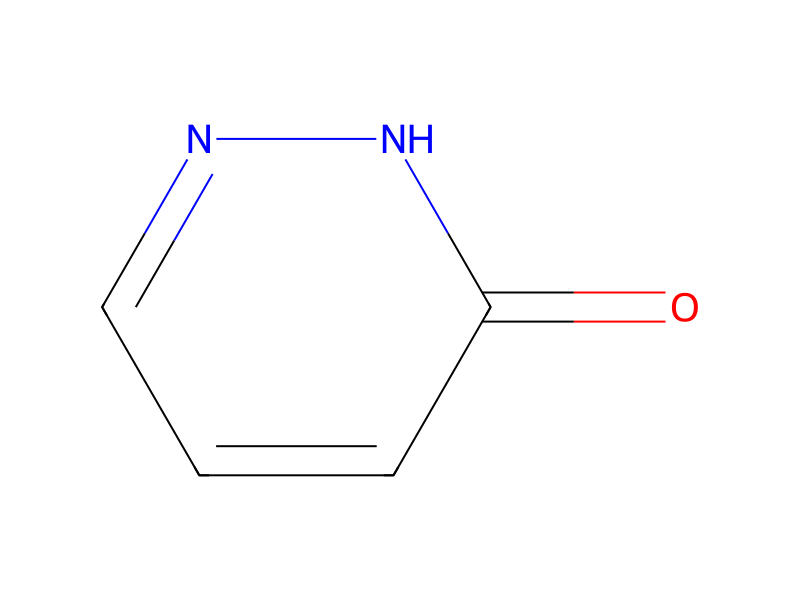
Product 1

Reagents, catalysts & solvents 1

Conditions
- Temperature
- 0 °C
Procedure
To a stirred solution of 5.76 g (0.06 mole) of 3(2H)-pyridazinone and 8 g (0.08 mole) of ethyl acrylate in 100 ml of ethanol, 2 ml of Triton-B was added dropwise while maintaining the temperature at 0° C. The mixture was refluxed for 4 hours, then distilled to give an orange oil residue. The crude oil was extracted with chloroform. The extract was washed with water, dried over anhydrous sodium sulfate and distilled. The residual oil was distilled in a vacuum to give 9.7 g (83% yield) of ethyl-3-(3-oxo-2-pyridazinyl)propionate as a colorless liquid boiling at 120°/121° C./1 mm Hg.
Workup
- temperatureThe mixture was refluxed for 4 hours
- distillationdistilled
- customto give an orange oil residue
- extractionThe crude oil was extracted with chloroform
- washThe extract was washed with water
- dry with materialdried over anhydrous sodium sulfate
- distillationdistilled
- distillationThe residual oil was distilled in a vacuum
Sources & evidence
- ORD record
- ord-a54db15818214ab9ae5552187444fb1a
- Source dataset
- uspto-grants-1980_12
- Patent number
- US04242512
Reaction notes
Loading…