Benzaldehyde → HCID 12857976, compound
Reaction equation

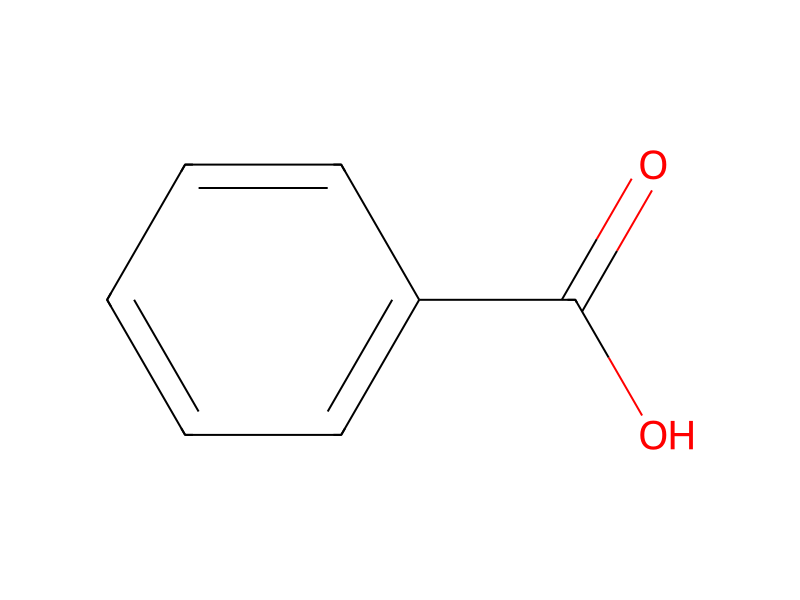
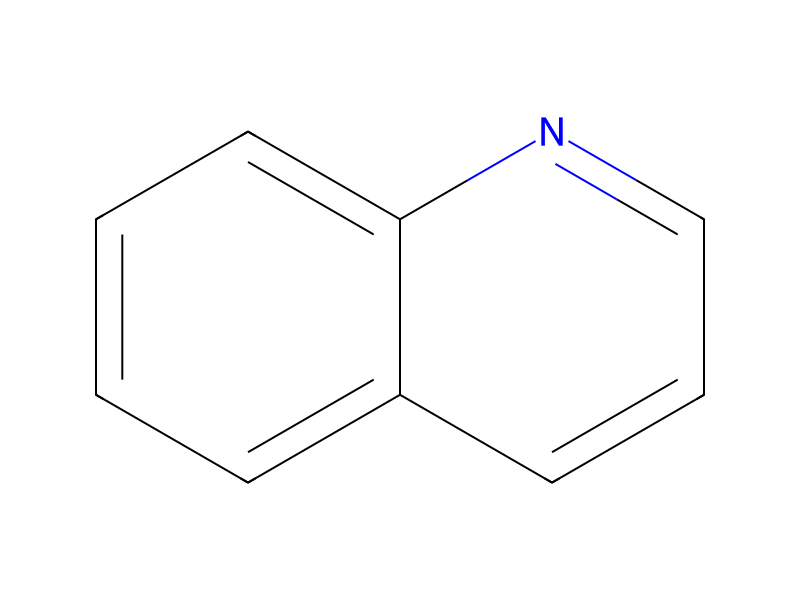
N1C2C(=CC=CC=2)C=CC=1.[CH3:11][C:12]1[CH:21]=[CH:20][C:19]2[C:14](=[CH:15][CH:16]=[CH:17][CH:18]=2)[N:13]=1.[CH:22](=[O:29])[C:23]1[CH:28]=[CH:27][CH:26]=[CH:25][CH:24]=1.C(O)(=O)C1C=CC=CC=1>>[OH:29][CH:22]([C:23]1[CH:28]=[CH:27][CH:26]=[CH:25][CH:24]=1)[CH2:11][C:12]1[CH:21]=[CH:20][C:19]2[C:14](=[CH:15][CH:16]=[CH:17][CH:18]=2)[N:13]=1Participants



Procedure
The method used is that of SKIDMORE and TIDD[The Quinoline series, Part I, 1641-1645, (1959)]. 5.3 ml of 2-methylquinoline (0.039 mol) and 3.56 ml of benzaldehyde 0.035 mol) are mixed with a little benzoic acid. The mixture is stirred at room temperature and the product is then left to crystallize for several weeks. The solution is filtered through sintered glass and the filter is rinsed with cold ethanol. The crystals remaining on the sintered glass are recrystallized in ethanol and then placed in a heating desiccator. 1.53 g of 2-(2-hydroxy-2-phenylethyl)quinoline are thereby obtained (Yld=24%). The filtrates are combined, the solvent is evaporated off therefrom and the products are then deposited on a silica column. 3.66 g of 2-methylquinoline and 1.9 g of 2-styrylquinoline are then obtained (Yld=18%). 69% of the starting 2-methylquinoline is recovered.
Workup
- waitthe product is then left
- customto crystallize for several weeks
- filtrationThe solution is filtered through sintered glass
- washthe filter is rinsed with cold ethanol
- customare recrystallized in ethanol
- customplaced in a heating desiccator
Sources & evidence
- ORD record
- ord-a7834f5805ca4d039b9e6079cf28ae8b
- Source dataset
- uspto-grants-1996_07
- Patent number
- US05541196
Reaction notes
Loading…