Triethylamine → 5-Naphthalen-2-yl-3H-[1,3,4]oxadiazol-2-one
Reaction equation

[CH:1]1[C:10]2[C:5](=[CH:6][CH:7]=[CH:8][CH:9]=2)[CH:4]=[CH:3][C:2]=1[C:11]([NH:13][NH2:14])=[O:12].C(N(CC)CC)C.[C:22](C1NC=CN=1)(C1NC=CN=1)=[O:23]>O1CCCC1>[CH:1]1[C:10]2[C:5](=[CH:6][CH:7]=[CH:8][CH:9]=2)[CH:4]=[CH:3][C:2]=1[C:11]1[O:12][C:22](=[O:23])[NH:14][N:13]=1Participants
Reactant 3


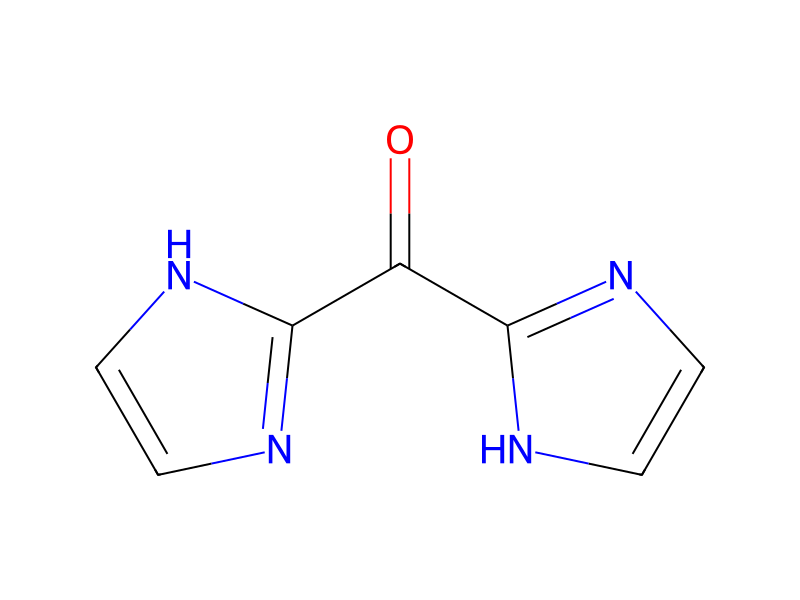
Product 1

Reagents, catalysts & solvents 1

Conditions
- Temperature
- 0 °C
Procedure
To a stirred mixture of naphthalene-2-carboxylic acid hydrazide (2.0 g, 10.7 mmol, prepared as described in example 1) and triethylamine (1.1 g, 10.7 mmol) in dry tetrahydrofuran (40 ml) was added carbonyl diimidazole (2.2 g, 13.4 mmol) at 0° C. The reaction mixture was stirred at 0° C. for 1 h and at room temperature for 17 h. The resulting reaction mixture was evaporated in vacuo and to the residue was added water (50 ml) and ethyl acetate (50 ml). The phases were separated and the organic phase was washed with saturated aqueous sodium chloride (2×25 ml), dried (MgSO4) and filtered and evaporated in vacuo affording 2.2 g of crude product which was recrystallised from a mixture of ethyl acetate and heptane 1:1 (60 ml) affording after drying in vacuo at 50° C. 1.2 g (52%) of the title compound as a solid.
Workup
- customThe resulting reaction mixture
- customwas evaporated in vacuo and to the residue
- additionwas added water (50 ml) and ethyl acetate (50 ml)
- customThe phases were separated
- washthe organic phase was washed with saturated aqueous sodium chloride (2×25 ml)
- dry with materialdried (MgSO4)
- filtrationfiltered
- customevaporated in vacuo
Sources & evidence
- ORD record
- ord-14d2634398e149b59fbd5cc57890b9d6
- Source dataset
- uspto-grants-1999_10
- Patent number
- US05972978
Reaction notes
Loading…