Dichloromethane → HCID 19010701, compound
Reaction equation

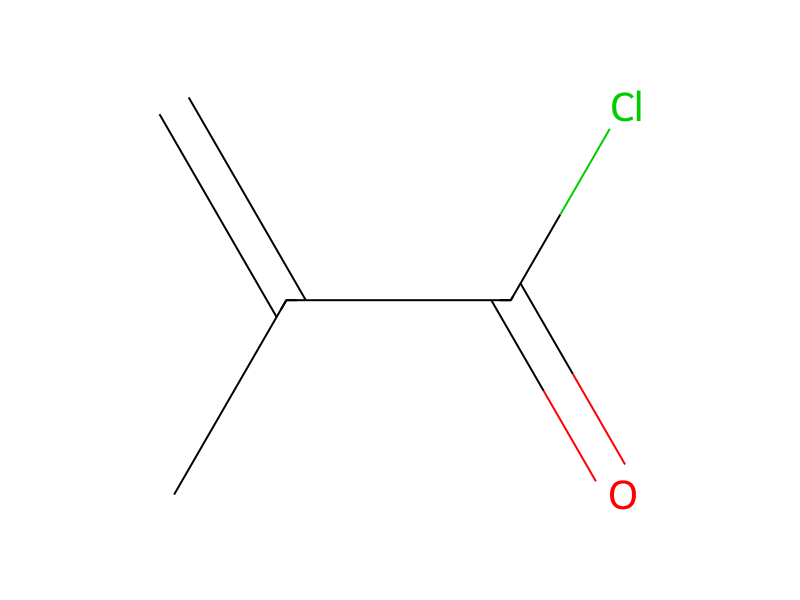
C(Cl)Cl.[C:4](Cl)(=[O:8])[C:5]([CH3:7])=[CH2:6].[CH2:10]([N:17]([CH2:24][CH2:25][OH:26])[C:18]1[CH:23]=[CH:22][CH:21]=[CH:20][CH:19]=1)[C:11]1[CH:16]=[CH:15][CH:14]=[CH:13][CH:12]=1>C(N(CC)CC)C>[CH2:10]([N:17]([CH2:24][CH2:25][O:26][C:4](=[O:8])[C:5]([CH3:7])=[CH2:6])[C:18]1[CH:23]=[CH:22][CH:21]=[CH:20][CH:19]=1)[C:11]1[CH:12]=[CH:13][CH:14]=[CH:15][CH:16]=1Participants
Reactant 3


Product 1

Reagents, catalysts & solvents 1

Procedure
1000 ml of dried methylene chloride are placed in a 4 l sulfonating vessel at 0° C. together with 334 g of methacrylic acid chloride. A mixture of 500 ml of dried methylene chloride, 323 of dried triethylamine and 454 of N-benzyl-N(β-hydroxyethyl)aniline, (the compound of formula 1a) are added drop by drop to this mixture at 0°-10° C. The reaction mixture is allowed to rise to room temperature slowly and is controlled on a thin layer chromatograph (silica gel) solvent: toluene/acetic acid ester 2:1. After the end of the reaction (after standing overnight), the reaction mixture is filtered and washed three times with one liter of a 10% aqueous NaOH solution and finally four times each time with 1 l of water. The organic phase is then dried over sodium sulphate and the solvent is removed in a rotary evaporator. 482 g of the product of formula 1d ##STR15## results.
Workup
- customat 0° C.
- customto rise to room temperature
- customAfter the end of the reaction (after standing overnight)
- filtrationthe reaction mixture is filtered
- washwashed three times with one liter of a 10% aqueous NaOH solution and finally four times each time with 1 l of water
- dry with materialThe organic phase is then dried over sodium sulphate
- customthe solvent is removed in a rotary evaporator
Sources & evidence
- ORD record
- ord-96337e7de061488c94b6a1916c296798
- Source dataset
- uspto-grants-1994_08
- Patent number
- US05334710
Reaction notes
Loading…